Workplace Safety Upgrade: Emergency Training Equipment Canada Buyers Should Consider
Emergencies do not wait for a convenient time or place. In a busy distribution centre, a high school gym, a remote hydro site, or an office tower in downtown Toronto, the first few minutes after a medical crisis often decide the outcome. Well chosen gear can shorten those minutes, sharpen response, and turn awkward theory into capable action. The market for emergency training equipment in Canada has matured, and with it, expectations from regulators, insurers, and students have risen. Choosing wisely makes training more credible and day‑to‑day safety more resilient.
Why the right training gear changes outcomes
I have watched a learner freeze at the sight of a manikin because the plastic face offered no feedback and the room felt like an exam. I have also watched a novice deliver textbook compressions within five minutes because the manikin gave real‑time coaching and the scenario felt approachable. https://privatebin.net/?5819889e461a2235#6VYNS5a6eGMZXWE2tUrJCRMc7oNX9nGaQWjSAgoFd3Gv Equipment does not replace an instructor’s judgment, but it sets the floor and ceiling for what students can experience. Proper CPR training manikins, realistic AED training equipment, and well appointed CPR and first aid training kits give learners the confidence to act under pressure. Over time, this compounds into fewer errors, faster scene setup, and fewer seconds lost on guesswork.
From a compliance angle, most Canadian workplaces fall under provincial or territorial occupational health and safety rules, while federal workplaces answer to the Canada Labour Code. In plain language, this means employers must provide first aid facilities, equipment, and training suitable to the hazards and location. The details vary by jurisdiction and workforce size, yet the pattern is clear. Good training equipment is not a nice‑to‑have, it underpins the competent response that the law assumes you will provide.
Match the kit to the work
A single national recommendation rarely serves. An oil sands maintenance crew deals with hypothermia and crush hazards. An elementary school staff learns pediatric response and asthma management. An Ontario food manufacturer wrestles with high noise levels, machine entrapment, and shift work. Before you buy, define the training outcomes you must achieve, grounded in your context. Then curate equipment that makes those outcomes visible and measurable in class.
Consider three lenses. First, student mix. Do you train novices once a year, or do you refresh a core emergency response team quarterly. Second, risk profile. High voltage work deserves focused scenarios and gear that simulates burns, bleeding, and electrical injuries without theatrics. Third, logistics. Urban sites can borrow or courier spares in a day. Far north mining camps need redundancy because shipments can stall for weeks.
CPR training manikins that build real skill
Manikin choice influences mechanical skill, hygiene, realism, and cost of ownership. In Canada, demand has shifted toward feedback enabled manikins that report depth, recoil, and rate, sometimes through a simple light system and sometimes through a mobile app. The best systems are clear, durable, and bilingual, or at least include English and French documentation.
Start with size mix. Adult, child, and infant manikins teach different mechanics and psychological cues. Many programs teach two rescuer CPR on adults while emphasizing single rescuer on infants. A set of four adult torsos can serve a class of eight to twelve with good rotation, but if schedule allows, I prefer a manikin per pair so instructors can observe and correct instead of managing long practice lines. For pediatric content, aim for a one‑to‑three ratio for infant manikins. People hesitate around small bodies, and extra time on babies reduces that hesitation.
Realism helps, yet it needs boundaries. Rib clickers mimic cartilage resistance and confirm depth, but flimsy shells that deform within a year teach the wrong feel. Look for compression springs or elastomers rated for high duty cycles, at least tens of thousands of compressions. Ask vendors about consumables, not only lungs and face shields but also chests, springs, and skin overlays. Annual cost can equal a third of the purchase price if you replace lungs and wipes for frequent courses. When comparing CPR training manikins Canada wide, include the full three year cost, not just the first invoice.
Hygiene protocols matter more than they did a decade ago. Quick swap face pieces and one‑way valves speed decontamination between students. If your courses run back to back, carry duplicate faces to rotate for disinfection dwell time. Consider alcohol compatibility. Some plastics craze over time with repeated use of isopropyl wipes, which leads to early cracking. Vendors should publish cleaning compatibility lists and instructions. If they do not, you will pay in surprise failures.
Finally, feedback data should inform coaching, not distract from it. I like manikins that show a simple green band when depth and rate align with guidelines and that log a summary at the end. Fancy graphs look great in a demo but can pull eyes away from learning in the moment. The best sessions I have seen mix short, coached practice sets with one or two measured scenarios per learner, then a review that links numbers to what they felt in their hands.
AED training equipment Canada buyers often overlook
There is a sharp difference between a live AED and a trainer. In many workplaces, procurement teams buy the public access defibrillator first and later realize they have no trainer that mimics its prompts and pad placement. Good AED trainer units mirror the brand and model your site actually uses. If your buildings run a Philips or ZOLL fleet, buy their compatible trainer or a high fidelity third party that matches voice prompts and pad shapes.
Look for bilingual prompts. Many AED training equipment Canada listings include French and English language packs. Confirm this rather than assume it. For organizations in Quebec or bilingual federal workplaces, toggling languages during practice helps teams rehearse without confusion. Also check pad tackiness and placement diagrams. Reusable pads should stick well on manikin skin and tolerate dozens of cycles before peeling. Trainers that include separate pediatric electrode simulation let you address weight and age cutoffs clearly. For mixed audiences, I like to run a pediatric case twice, once with a switchable mode and once with true pediatric pads, because the tactile memory of swapping pads sticks with learners.
As a fine point, ensure trainer remotes allow instructors to inject errors on demand. A shockable rhythm, a no‑shock advised prompt, a flat battery cue, a loose pad reminder, these are all teachable moments. Trainers that only follow a single script create brittle competence. A remote that throws a rare prompt gives you a short, realistic jolt that sticks. Finally, check for CSA or equivalent electrical safety marks on charging systems and confirm replacement pad availability in Canada. A trainer is a paperweight if you cannot buy new pads without waiting four to six weeks.
CPR and first aid training kits that encourage scenario work
The best classes feel like rehearsals, not lectures. That means kits stocked for messy, hands on work. Beyond standard triangular bandages and roller gauze, include items that drive decision making. Tourniquet trainers with visible windlass mechanics improve hemorrhage control if your risk profile includes machinery, forestry, or high energy tools. Pressure bandage trainers that can be applied and reset encourage repetition. Epinephrine auto‑injector trainers are small and inexpensive, yet they remove so much fear from anaphylaxis management that I rarely run a course without them. If your setting warrants it, naloxone trainers teach intranasal delivery without the pressure of a real overdose.
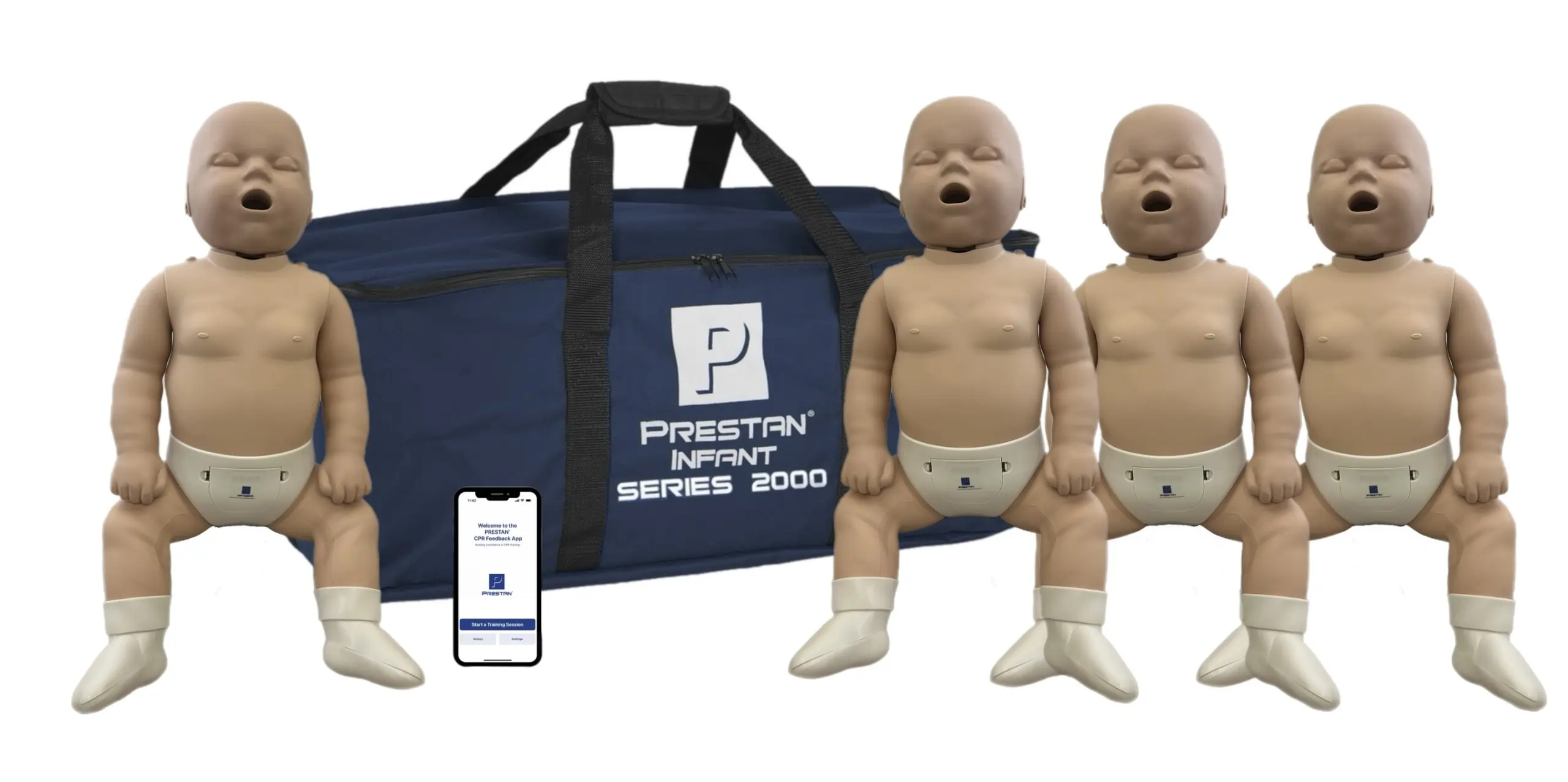
Moulage supplies can be overdone. You do not need Hollywood gore. A handful of silicone wounds, a little washable blood, and a few adhesive sheets can create lifelike cuts, burns, and bruises that make learners assess and reassess. Place wounds under clothing occasionally so students learn to expose rather than guess. Keep cleanup simple, and protect manikins with washable overlays so you do not destroy them with pigment.
Inventory management sneaks up on teams. Plenty of Canadian buyers forget that simulated lungs, filters, and wipes burn fast when a busy calendar hits. Build a simple spreadsheet and reorder when you hit a 60 day supply. Keep sealed backup kits locked and labeled for real emergencies. Training gear can spill into the workplace first aid supply if you are not disciplined, and then both sides suffer.
What belongs in CPR instructor packages Canada wide
Instructor packages serve two masters, mobility and throughput. A solo instructor hauling equipment between sites needs durable cases, fast setup, and intuitive layouts. For a fixed training room, robustness and redundancy matter more. In both cases, pack to your course flow. If you start with scene safety, then PPE, then compressions, then breathing, load your kit in that order. You will move faster and forget less.
Instructors who travel also benefit from regional awareness. Winter car trunks freeze. Lithium batteries in feedback devices sag in the cold. Keep sensitive electronics in insulated cases and, if you can, bring them indoors overnight. Airlines and couriers handle hard shell cases better than soft duffels. Inside, foam cutouts protect valves and heads from cracking. I learned the hard way, two cracked infant faces after a rough drive on Highway 17 taught me to invest in better internal protection.
For class size planning, I have found that one instructor working with eight to ten learners strikes a balance between personal feedback and time pressure. For larger groups, a second instructor or assistant maintains quality. Pack enough consumables to run two back to back sessions. That usually means at least two lungs per manikin, twice the valve count you think you need, and disinfectant in pump bottles plus spare nitrile gloves in multiple sizes. Include print or digital quick reference cards in both English and French. Even anglophone sites often appreciate the bilingual cue cards when vendors or visitors come from Quebec.
Canada specific buying details that save grief later
A seasoned buyer looks beyond features toward supportability. With emergency training equipment Canada buyers should prioritize local service and parts availability. Ask vendors where parts ship from. Calgary, Montreal, and the GTA have better lead times than US warehouses that trigger customs holds. While there are no customs within Canada, some suppliers still route through the United States. That adds days and unexpected brokerage fees. Confirm warranty terms in writing and ask how warranty shipping works from Yukon, Northern Ontario, or Newfoundland. Remote return policies matter when roads or flights close.
Bilingual packaging and manuals reduce friction for large employers and public sector clients. If your facilities cross provincial lines, choose devices that toggle prompts between English and French without a firmware swap. Also check standard compliance. Many AED trainers plug into chargers, so look for CSA, cETLus, or equivalent marks to satisfy internal electrical safety teams. If you use app connected feedback, make sure the app works offline. Remote sites suffer spotty connectivity, and nothing sinks a day faster than an app that demands a login mid class with no signal.
Cold resilience is not marketing fluff here. Room temperature for training is not always guaranteed in a field trailer or an unheated shop on a February morning. Storage ratings for elastomers, adhesives on electrode pads, and battery chemistry affect whether your gear still works when you unpack it. If your work takes you to the cold, test key items in that environment once, and adjust storage habits accordingly.
How many units, how much budget, how long will they last
Numbers vary with intensity and care, but ranges help. For a steady training program that runs monthly courses of 8 to 12, a practical adult manikin pool is four to six torsos. Add two child torsos and three infant bodies. Expect to replace consumable lungs every 20 to 40 students per manikin, depending on model, and one‑way valves annually if used heavily. Good midrange manikins run roughly 300 to 700 CAD each for basic models with light feedback, 900 to 1,800 CAD for app connected feedback units. Premium full body manikins are a different league and better suited to clinical or advanced rescue programs.
AED trainer units commonly fall between 250 and 800 CAD per unit depending on fidelity and brand compatibility. Spare pad sets run 30 to 80 CAD and are the quiet cost that adds up. Trainer batteries vary. Some include rechargeable packs, others run on AA cells. Multiply the true cost by your expected class count before you commit.
For CPR and first aid training kits, budget 300 to 1,200 CAD to assemble a robust scenario kit with bandaging trainers, a tourniquet or two, epinephrine and naloxone trainers, and moulage basics. If you plan Stop the Bleed or other hemorrhage focused modules, plan on two to four tourniquet trainers per class to reduce idle time. Quality tourniquet trainers are 40 to 60 CAD each, realistic junctional or pelvic bleeding trainers cost more and are usually overkill for workplace environments.
Instructor packages that include transport cases, disinfectants, PPE, laminated cards, and spares often run 1,500 to 3,500 CAD beyond the core manikin and AED trainer pool. If you build across a network of sites, centralize advanced gear and buy modest local kits that handle routine refreshers. This mix prevents expensive gear from gathering dust while still meeting annual practice needs.
With correct cleaning and storage, manikin shells can last three to five years. Feedback sensors and springs occasionally fail earlier if classes are intense. Keep a small fund for midlife repairs. AED trainers follow a similar arc. They live longer if you update firmware and replace pads before adhesive failures force learners into bad habits.
Running better sessions with the gear you own
Equipment is only half the story. Class flow turns equipment into habit. Start with one or two simple skill stations that learners rotate through with coaching and feedback on. Keep drills short, 60 to 90 seconds, then reset and switch roles. Early wins cut through anxiety. After warm up, run two integrated scenarios that require calling for help, pad placement, compressions, and airway management decisions. Tie the debrief to what learners felt under their palms, the pad diagrams they followed, and the prompts they heard. When someone misses a cue, rewind twenty seconds and let them fix it rather than lecture for five minutes.
Maintain a strict disinfecting rhythm without drama. Learners notice care. Have wipes and hand rub ready at the manikin station. Swap faces or valves at logical breaks, not as a spectacle. If you teach in mixed language environments, alternate the language settings on AED trainers by pair. The slight novelty keeps attention high and prepares people for a real incident where a device might default to the other language.
Record keeping matters. Most app based feedback systems can email a session summary. Save those in a folder named by date and class. Even if you rarely need to prove competency, the day you do, you will be grateful for two clicks to a PDF that shows practice rates and depths for the cohort that month. Where apps are not present, a simple sign off sheet and instructor notes on performance gaps still create a picture of diligence.
A short case from an Ontario food plant
A mid sized food processing plant west of Kitchener called because staff hesitated during a drill. They owned a respectable AED fleet and had trained a dozen employees yearly. The sessions were lecture heavy, with one manikin and one trainer AED. During the drill, three people moved at once, then no one took charge. Two stood by because they had never actually touched the equipment.
We rethought the inventory. They purchased three adult torsos with simple light feedback, one infant manikin, and two AED trainers that matched the live units. We built a CPR instructor package around quick swap faces, bilingual cue cards, and a basic bleeding control kit because the site used blades and slicers. That was all, nothing exotic. Training shifted to pairs and trios, with tight practice loops and two short scenarios per learner. Within one quarter, their drills changed character. People moved with purpose, one voice led, and the crew rotated roles without awkwardness. Costs came out under 4,500 CAD, including consumables for the year. What changed was not just more gear, but the right mix aligned to the site and the way people learn.
Quick buyer checklist for emergency training equipment Canada programs
- Confirm training goals tied to your hazards and class sizes, then map gear to those goals before browsing catalogs.
- Choose CPR training manikins Canada vendors can service locally, and compare three year consumable costs, not just purchase price.
- Match AED training equipment Canada wide to your installed live AED brand, with bilingual prompts and instructor error injection.
- Stock CPR and first aid training kits for hands on scenarios, including a modest moulage set and drug trainers suited to your risks.
- Verify support factors, from CSA marks to spare part lead times, and test battery and adhesive performance in your actual environment.
Common mistakes that sabotage well meaning programs
- Buying one premium manikin instead of a small pool. Solo units create queues and passive learning. Three decent torsos beat one expensive body every time in workplace courses.
- Skipping child and infant practice because the site is “adults only.” Emergencies do not honor job descriptions. Even a brief pediatric module reduces fear and rounds out skills.
- Ignoring consumables in budgets. When the valve box runs dry two hours before class, credibility takes a hit and training loses momentum.
- Using a trainer AED that does not match the live model. Muscle memory matters, and pad shape, voice cadence, and button placement differ more than you think.
- Treating sanitizing as an afterthought. Learners judge how safe they feel, and poor hygiene drives disengagement and complaints long after the course.
Judging value rather than hype
I like to ask one blunt question of any new piece of equipment. Will this help my learners act faster or more accurately under stress, or does it just entertain? Features that survive that filter usually involve tactile feedback, bilingual clarity, ease of decontamination, or scenario flexibility. Features that fail often live on spec sheets and do not change behavior in the room.
There is room for technology, especially when it tightens feedback loops. App based QCPR systems can quantify progress in ways intuition alone cannot. But I also keep one plain manikin in circulation because learners should not depend on a screen to know if a chest is recoiling. Balance bright lights with honest feel.
Sourcing and vendor relationships
Canadian distributors vary from national medical supply houses to small specialist shops. The best partner is responsive, transparent about backorders, and candid about which items break and which do not. Ask for demo units or trial periods. Many vendors will lend a manikin set for a week if they sense a thoughtful buyer. Instructors know quickly if a device suits their flow. Favor vendors who maintain local repair capacity or quick swap programs. Waiting three weeks for a simple valve seat repair can wipe out a training block.
For public sector buyers and larger corporations, framework agreements can lock in pricing but sometimes restrict choice to a narrow catalog. Keep a small exception path for niche items like pediatric pads or bilingual overlays when the catalog misses. Safety programs stagnate when procurement rules iron out needed variety.
A practical path to an upgrade
Map your next twelve months of courses. Note class sizes, audience types, and any regulatory deadlines. Do a shelf audit of your current gear. What is expired, what is missing, what always causes friction. Then prioritize two or three high impact upgrades, not a total overhaul. In many programs, that means adding one AED trainer that matches your fleet, doubling manikin count to support pair work, and assembling a portable scenario kit that lives in a dedicated case. Train with the new gear twice, gather instructor and learner feedback, and adjust. Once the basics hum, add niceties like more pediatric capacity or advanced bleeding trainers if your hazards warrant them.
When you treat equipment as part of a living practice, not as a sunk cost, the room changes. People walk in, see useful, cared‑for tools, and intuit that this time will be different from the last safety talk that felt like a check box. That feeling is the first sign you chose well.
CPR Depot Canada — Business Info (NAP)
Name: CPR Depot CanadaAddress: 340 Croft Dr, Tecumseh, ON N8N 2L9
Phone: +1-877-570-7322
Website: https://cpr-depot.ca/
Email: [email protected]
Hours:
Monday: 9:00 AM – 6:00 PM
Tuesday: 9:00 AM – 6:00 PM
Wednesday: 9:00 AM – 6:00 PM
Thursday: 9:00 AM – 6:00 PM
Friday: 9:00 AM – 6:00 PM
Saturday: Closed
Sunday: Closed
Open-location code (Plus Code): 8537+C8 Tecumseh, Ontario
Map/listing URL: https://www.google.com/maps/place/CPR+Depot/@42.3036,-82.8392601,17z/data=!3m1!4b1!4m6!3m5!1s0x883b2aedd5f271a1:0xfee6f8b7ab8f4110!8m2!3d42.3036!4d-82.8366852!16s%2Fg%2F1q6cff15h
Embed iframe:
Socials:
https://www.facebook.com/people/CPR-Depot-Inc/61575911496200/ https://www.instagram.com/cprdepotinc/ https://www.youtube.com/@CPRDepot
https://cpr-depot.ca/
CPR Depot Canada is a supplier of medical training products and related supplies serving customers across Canada.
The business is listed at 340 Croft Dr, Tecumseh, ON N8N 2L9.
To contact CPR Depot Canada, email [email protected] or call +1-877-570-7322.
Hours listed are Monday–Friday 9:00 AM–6:00 PM, with Saturday and Sunday closed.
For directions and listing details, use: https://www.google.com/maps/place/CPR+Depot/@42.3036,-82.8392601,17z/data=!3m1!4b1!4m6!3m5!1s0x883b2aedd5f271a1:0xfee6f8b7ab8f4110!8m2!3d42.3036!4d-82.8366852!16s%2Fg%2F1q6cff15h
Popular Questions About CPR Depot Canada
Where is CPR Depot Canada located?CPR Depot Canada is listed at 340 Croft Dr, Tecumseh, ON N8N 2L9.
What are the hours for CPR Depot Canada?
Hours listed: Monday–Friday 9:00 AM–6:00 PM; Saturday and Sunday closed.
What does CPR Depot Canada sell or provide?
CPR Depot Canada supplies medical and first aid training products and related equipment (product availability varies).
Do they ship across Canada?
The business markets to Canadian customers and operates as a Canada-wide supplier; confirm shipping options at checkout or by contacting [email protected].
How can I contact CPR Depot Canada?
Phone: +1-877-570-7322
Email: [email protected]
Website: https://cpr-depot.ca/
Map: https://www.google.com/maps/place/CPR+Depot/@42.3036,-82.8392601,17z/data=!3m1!4b1!4m6!3m5!1s0x883b2aedd5f271a1:0xfee6f8b7ab8f4110!8m2!3d42.3036!4d-82.8366852!16s%2Fg%2F1q6cff15h
Landmarks Near Tecumseh, ON
1) Tecumseh Town Hall2) Lacasse Park
3) Lakewood Park
4) WFCU Centre (Windsor)
5) Devonshire Mall (Windsor)