The Ultimate Starter Set: CPR Training Manikins and AED Trainers for New Canadian Instructors
Starting a CPR and AED training program in Canada can feel like outfitting a small clinic. The gear you choose will shape how confidently your students learn, how smoothly your classes run, and how sustainable your business becomes. Over years of setting up courses for workplaces, community groups, and remote teams, I’ve found that smart choices up front save money, time, and headaches later. This guide focuses on the hands-on heart of the classroom - CPR training manikins and AED training equipment - and how to build a dependable starter set for new Canadian instructors without overspending.
The baseline your equipment needs to meet
Canadian programs align closely with international resuscitation guidelines, but there are quirks that matter. Your manikins must allow students to practice compressions to a depth of about 5 to 6 centimetres on adults, at a rate around 100 to 120 per minute, with clear recoil. For infants and children, the feel should change in a realistic way. Beyond mechanics, feedback matters. Most modern curricula expect real-time coaching on depth, rate, recoil, and sometimes hand position. AED trainers should mimic models actually found in Canadian workplaces, with clear voice prompts, a metronome, and a reliable child mode.
You also need gear that holds up to use. A weekday instructor can run 8 to 12 courses a month. Even a part-time instructor sees dozens of learners pressing on the same chests. Cheap plastic torsos with vague springiness rarely survive a full season. Reputable brands offer replaceable lungs, faces, and compression springs, and they publish cleaning instructions that pass workplace infection-control checks.
Finally, remember the Canadian context. Labels and audio prompts that include French help in Quebec and bilingual workplaces. Pads should stick to clothing commonly worn in winter so students can learn pad placement without perfect bare skin. And you need consumables that ship fast across provinces and territories without customs surprises. When you shop, confirm delivery to your exact location - northern communities sometimes see extended lead times.
CPR training manikins that teach well and last
If you teach more than a handful of classes a year, invest in adult manikins with measurable feedback. That decision pays off in student confidence and in adherence to employer audits. I rotate between three families depending on budget and teaching goals.
Prestan Professional manikins have a simple light-based feedback system that shows rate and depth. They are known for durability, low-cost lungs and faces, and a chest that feels realistic without being punishing. I have sets that have survived five years, easily 1,500 students, with routine cleaning and occasional spring replacement. The built-in clicker provides audible confirmation of compression depth that students love, though it is not as detailed as app-connected models.
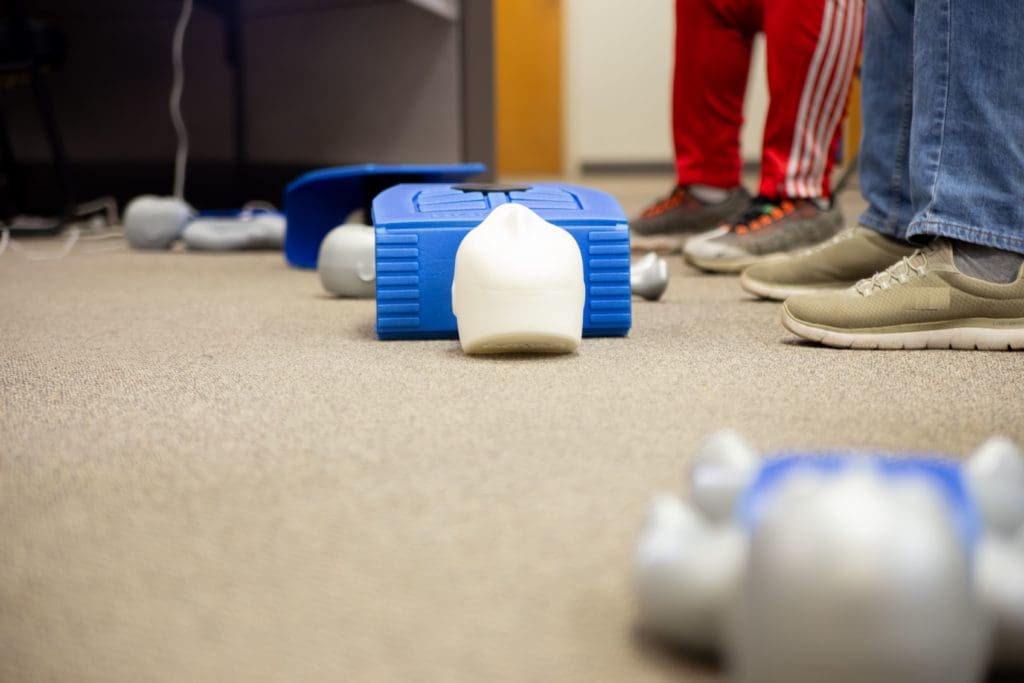
Laerdal’s Little Anne QCPR and Little Junior QCPR use Bluetooth apps to report depth, rate, recoil, and hand placement, and they generate quick debrief scores. For large classes with mixed skill levels, that objective data tightens technique fast. The trade-off is battery management and the need for a phone or tablet, and they cost more upfront. For instructors who teach recertifications in corporate settings where measurable outcomes are prized, QCPR is worth it.
Brayden manikins illuminate simulated blood flow in the torso as compressions reach target depth and rate. The visual cue is compelling for first-time learners who struggle to “feel” effective compressions. The compression feel sits between Prestan and Laerdal. They are less common in Canada than the first two, which can affect parts availability, but national distributors do carry consumables.
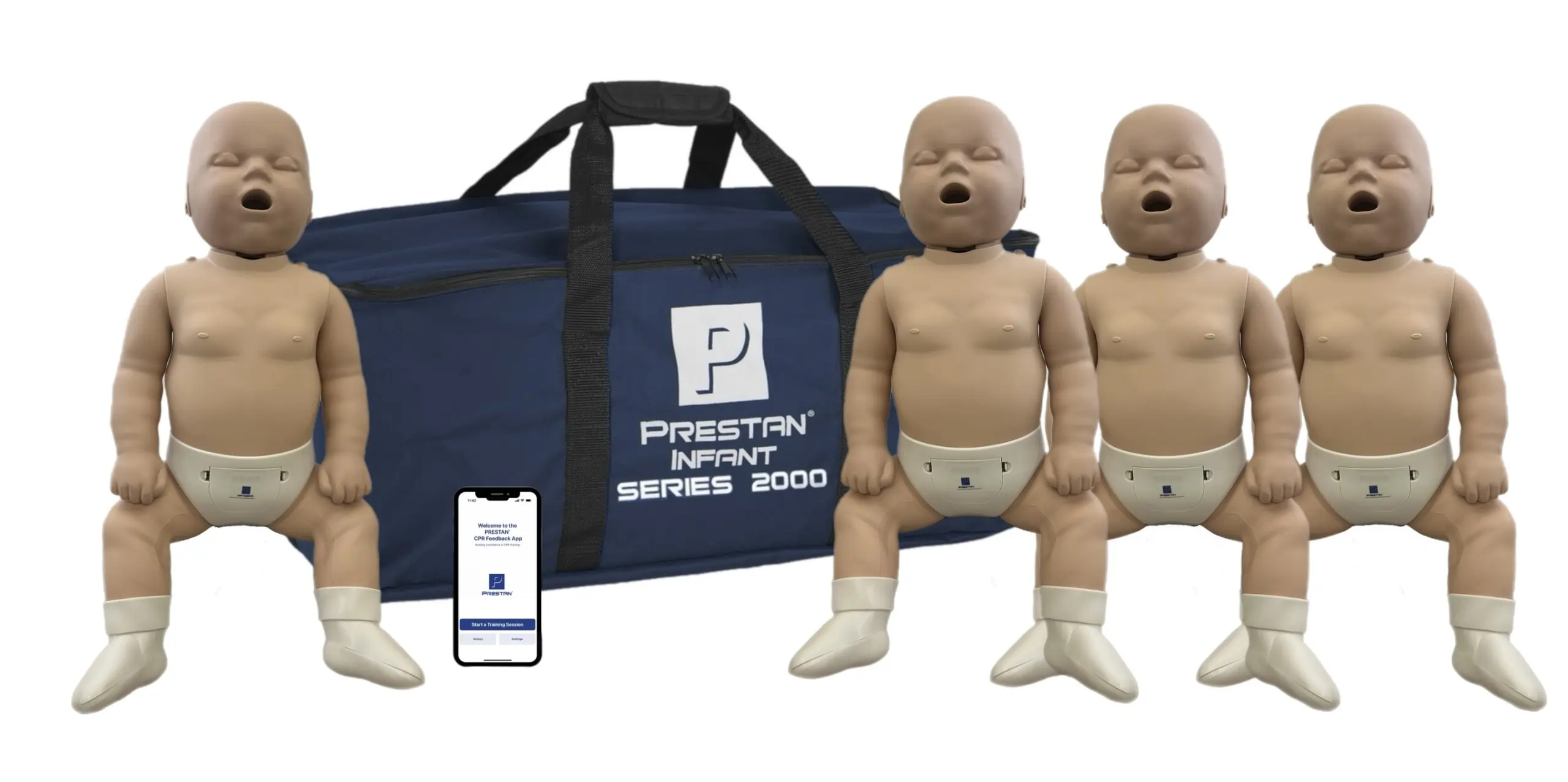
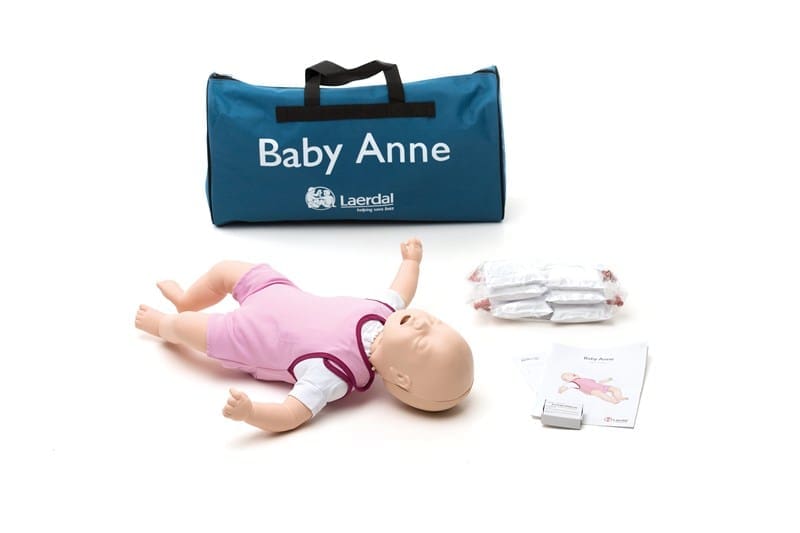
For infants, choose manikins that support both chest compressions and ventilations that require realistic head tilt and chin lift. Prestan Infant and Laerdal Baby Anne both give good learning feedback. If your market https://damienvsyk213.lucialpiazzale.com/zoll-aed-accessories-canada-guide-compatibility-lifespan-and-costs-1 includes childcare providers, the difference between models is not academic. Watch for manikins that accept an infant airway and take standard lungs so you can switch components quickly between classes.
Choking trainers are worth adding after you stabilize your core set. The stand-alone foam-bodied choking manikins teach abdominal thrusts and back blows well. In smaller operations I teach the choking sequence with regular manikins and demonstration vests for the first season, then bring in a dedicated choking trainer once classes fill consistently. That defers a few hundred dollars without compromising learning.
How many manikins do you really need?
One manikin per two students is the sweet spot for throughput and hygiene. You can run a four-hour basic CPR course for 12 learners with 6 adult torsos and 4 infant manikins without anyone waiting too long. In a pinch, you can stretch to three students per manikin, but you will need to enforce rotation time strictly. The more people share a manikin, the more disinfecting cycles you must do between hands and mouths, and the less time anyone spends getting a feel for proper recoil.
Budget instructors sometimes start with only adult manikins. If your clients include schools, camps, or family programs, add infants early. Most community contracts in Canada either require infant skills or expect them for completeness. A single infant four-pack costs roughly the same as two adult torsos, and it fulfills a big portion of expected content.
What does “realistic” feel like?
Realistic does not mean hard. It means the chest responds progressively, then offers a tactile stop near the target depth. Cheap torsos bottom out abruptly or, worse, feel like a sponge. If your wrists ache after a few minutes of demo compressions, students with smaller hands will struggle. In winter, classes often include people recovering from minor strains, shoveling injuries, or office fatigue. A manikin that punishes the instructor will make those students hold back. In my classes, models with a pronounced recoil sound help learners time the next compression and maintain the 100 to 120 per minute rhythm without constantly looking at a metronome.
AED training equipment Canada: matching what learners will actually see
Canada’s workplaces deploy a mix of AED brands. The common models I encounter in offices, rinks, and airports are the Zoll AED Plus and AED 3, Philips HeartStart OnSite and FRx, and Physio-Control Lifepak CR2. AED trainers that mimic these devices help students translate classroom practice to the real cabinet on the wall.
A good trainer should offer bilingual voice prompts or a quick switch between English and French. It should have pediatric capability, whether through a child mode button or separate child pads. A metronome for compressions matters when energy lags late in the class. Look for reusable training pads that stick through several sessions to cotton shirts and to the manikin surface, though expect to replace them every 8 to 12 classes once the adhesive downgrades.
I avoid universal “one size fits all” trainers that only vaguely resemble real devices. They save money initially, but students later hesitate when they meet the actual Zoll or Philips layout. Model-specific trainers cost more but cut hesitation and error during drills.
An overlooked detail is battery strategy. Some trainers use AA batteries and run for months, others use rechargeable packs that drift if they are not topped up weekly. In winter, cold vans eat charge. I keep a labeled box of spare AAs and a compact charger for rechargeables in my teaching bin. Replace or top up before every road trip, not after.
For most new instructors, two AED trainers cover a class of 12 well, especially if you integrate them into the CPR rotation. When budgets tighten, start with one trainer and one demo unit - a photo-accurate replica with a dead battery compartment - so learners can touch the interface between runs on the live trainer.
A realistic starter set for Canadian classrooms
Different instructors serve different markets. A downtown contractor building a roster of corporate clients needs more feedback capability and bilingual coverage. A community volunteer teaching monthly sessions for parents can do just fine with rugged, basic sets. The gear list below prioritizes reliability and availability of parts in Canada.
Starter set checklist for a class of 8 to 12 learners:
- Six adult CPR training manikins with feedback, torso style, from a brand with parts stocked in Canada
- Four infant CPR manikins with feedback and realistic airway management
- Two AED trainers that mimic locally common models and include English and French prompts
- Spare consumables: at least 24 adult lungs and 16 infant lungs, 12 adult faces or barrier shields, two sets of AED training pads per trainer
- Cleaning supplies and PPE: medical-grade wipes compliant with the manikin’s plastics, gloves in multiple sizes, and sealable waste bags
With that set, you can teach adult, child, and infant CPR, AED use, and choking relief comfortably. You can run back-to-back classes with minimal downtime, and you can handle last-minute bookings without borrowing gear.
What to spend, and where the money actually goes
Pricing moves around with exchange rates and distributor promotions, but the following Canadian dollar ranges hold up over time:
- Adult manikins with feedback: CAD 250 to 450 each. Four-packs usually land between CAD 1,200 and 1,800 depending on the brand and whether they include a carry case.
- Infant manikins: CAD 220 to 400 each. Four-packs typically sit between CAD 1,000 and 1,600.
- AED trainers: CAD 250 to 600 each. Model-specific units trend higher, generic units lower.
- Consumables: lungs and faces cost around CAD 0.50 to 2.00 per learner per manikin, depending on whether you use replaceable faces, barrier shields, or both. AED training pads cost CAD 40 to 80 per pair and last for several classes.
A fully capable starter set for 12 learners with feedback manikins and two AED trainers usually lands between CAD 3,800 and 6,500. If you opt for app-connected QCPR across the board, expect the high end of that range or a bit more once you include tablets or phones if you do not want to use your personal device.
CPR instructor packages Canada: buy bundle or build your own?
Some distributors sell CPR instructor packages in Canada that bundle manikins, an AED trainer, a bag valve mask, face shields, and cleaning supplies. Bundles are convenient and often shave 5 to 15 percent off separate pricing. The catch is fit. I have unboxed bundles that included a universal AED trainer I would not choose, or child manikins when I explicitly needed infants. If a bundle lines up with your teaching goals, take the savings. If not, ask the distributor for a custom bundle price. Many will match the bundle discount with your hand-picked components, especially if you commit to buying consumables for the next year.
Another angle is refurbished or gently used gear. For manikins, I avoid used unless they are recent models with easily replaceable parts and come from an organization that maintained them. For AED trainers, used units can be smart buys as long as the audio prompts are current and pads are still supported. Try to source used gear locally to avoid shipping surprises.
How the classroom flows with the right equipment
A class runs faster when equipment is easy to carry, lay out, and reset. Adult four-packs with rolling cases make a difference if you teach in office towers. Manikins that stack flat without crushing the chest springs matter when you load your car twice a day. AED trainers that store their pads on the device cut five minutes off every setup.
I stage two manikin lines facing each other across a center aisle, with an AED trainer at each end. The visual symmetry helps learners track where to rotate. I assign partners and ask them to switch every two minutes when the instructor calls time. That rhythm beats the metronome into their muscle memory and helps you spot early who needs individual coaching. If you teach alone, this layout lets you walk the aisle and fix hand placement without interrupting the flow.
Infection control that fits real teaching life
Cleaning protocols must be repeatable in the real intervals you have between skills. I keep a “clean table” and a “dirty table.” Used faces and lungs go straight in a labeled bin with a lid. I wipe down the manikin chest, face mount, and shoulders with a 70 percent isopropyl wipe between users, and again after class. Some manufacturers warn against bleach or quaternary ammoniums that discolor plastics or damage valves, so check your model’s guidance. For baby manikins, pay extra attention to the mouth and nose, where residue builds faster. Replace lungs more often than you think, especially in dry winter months when static dust sticks to the inside of the chest.
During respiratory illness peaks, I add single-use face shields even if the manikin has replaceable faces. It adds cents per learner but reduces cancellations and reassures clients. Gloves in small, medium, and large sizes keep sessions moving. People will not fuss with gloves that do not fit, they will simply skip ventilations.
Bilingual realities and Canadian compliance
If you work in Quebec or with national clients, bilingual equipment is more than a courtesy. AED trainers with a language switch on the faceplate simplify class management. Printed quick guides in English and French, ideally laminated, earn points with auditors. When buying CPR and first aid training kits, confirm that any included posters or skill cards have bilingual options. Most national distributors in Canada can supply both languages, but you have to ask.
While training manikins and AED trainers are not patient-care medical devices, they still ride on workplace safety rules. Keep Safety Data Sheets for your cleaning supplies in your kit. Store sharps, if you carry epi trainer devices, in a hard container even though they are non-functional. Neatly labeled bins with lids travel well in Canadian weather and pass site safety checks.
The case for feedback technology
There is a living debate among instructors about how much feedback tech to bring into basic classes. Purists say hands, eyes, and an instructor’s ear are enough, and they are not wrong. But classes are getting bigger, and employers want evidence that staff reach benchmark performance. App-connected manikins and analytics provide simple debriefs and identify common errors instantly. In my sessions, learners who see that their depth lands at 4.2 centimetres push harder without me hovering. On recertifications, objective scores cut the warm-up period by minutes.
The downside is battery upkeep and the potential for tech to distract. If you go QCPR, run one or two stations with apps and keep the rest analog. Rotate groups through the tech station, then let them apply the feel they learned on the regular manikins. That hybrid setup keeps attention on skills while still producing usable data.
Outfitting for travel and remote delivery
Teaching across long distances invites a different set of constraints. Winter roads and small aircraft cargo holds do not love bulky plastic. If you travel to remote communities, pack lighter and more modular. Two adult torsos and two infants, plus one AED trainer and one demo unit, will carry a surprising load of learning when paired with focused scenarios. Bring extra lungs and pads because replacements may not arrive on time. Pack lithium batteries and cleaning wipes in compliance with airline rules - carry-on limits and sealed packaging are not optional once you leave big hubs.
Internet access may be unpredictable. If you rely on app-based feedback, make sure the apps run offline and that you have spare cables or power banks. I keep a printed troubleshooting card for each device with plain-language resets. It sounds fussy until the day a Bluetooth pairing fails five minutes before a class in a school gym with no cell signal.
Stretch items that elevate your classes
Once the basics are covered, a few additions make classes smoother and more believable. A compact bag valve mask for adult drills, used by the instructor to demo effective ventilations, reinforces correct volume and timing. Not all learners need to master BVM, but they respect the skill, and it sets the tone for careful breaths in mask-to-mouth practice. A set of pocket masks with one-way valves gives learners a realistic seal and reduces the ick factor that still stalls some participants.
Simple training AED wall signs and a faux cabinet turn a sterile room into a scenario space. People act differently when they have to stand up, point, and send a runner for the AED. A stopwatch or a wall clock visible from every station keeps the tempo honest.
Where to buy and how to avoid delays
National distributors that specialize in emergency training equipment Canada usually stock major brands, carry bilingual materials, and ship quickly. When comparing vendors, ask about:
- Inventory in Canada versus drop-ship from the United States, which can add customs delays
- Warranty handling within Canada and average turnaround times
- Cost and availability of consumables like lungs, faces, and replacement pads
- Loaner options if a product needs repair during your busiest weeks
Local dealers sometimes beat national shops on speed for last-minute orders. Build a relationship with one of each. If you teach in Western Canada, confirm winter shipping timelines. Crossing the Rockies can add days when storms stack up.
Two sample packages at different budgets
Lean community starter focused on durability and simplicity. Six adult Prestans with light feedback and four Prestan infants cover core skills without apps. Add one model-specific AED trainer that matches the most common AED in your region and one generic practice unit for interface familiarity. Consumables for 150 learners, cleaning supplies, and two carry cases. Expect a bill around CAD 3,800 to 4,600, depending on promotions.
Data-forward corporate starter for measurable outcomes. Four Little Anne QCPR adults and two standard adult manikins allow both app and analog practice. Four infant manikins, two AED trainers that match the client’s units across sites, bilingual prompts enabled. Dedicated tablet for QCPR with protective case, plus a compact Wi-Fi router for congested buildings where Bluetooth gets noisy. Expect CAD 5,500 to 7,000, with costs pushed by the QCPR bundle and spare pads.
Both sets handle a class of 12. The corporate set shines when you need reports and when clients ask how you know staff met performance targets. The community set earns its keep through low per-student consumable costs and simpler logistics.
Making your equipment pay for itself
Calculate your per-learner equipment cost honestly. If lungs and wipes average CAD 1.50 per person and AED pads spread over ten classes equal CAD 1.00 per person, build CAD 3.00 of consumables into your course pricing. Add a margin for future replacements. When I began teaching, I ignored small costs and ended the quarter scrambling to replace a full set of pads. Now I earmark a percentage of each invoice for consumables and set a reminder to reorder at 60 percent of my stock level. No last-minute panic, no skipped classes.
Keep a simple maintenance log. Dates, parts replaced, any tech glitches. During audits or warranty claims, that log will save you time. It also tells you which brands are stretching their legs and which ones cost you in lost prep time.
A few pitfalls to avoid
Do not buy manikins so cheap you avoid using them aggressively. Students mirror your body language. If you wince as you compress because the chest feels wrong, they will hold back. Avoid AED trainers with outdated prompts, even if the price is tempting. Learners remember exact phrases and tones. Mismatch those, and you build confusion that shows up in real emergencies.
Avoid single-language audio if you plan to expand beyond a single region. Upgrading an entire fleet later costs more than starting with bilingual-capable units now. Do not skimp on carry solutions. A broken zipper on a rolling case will cost you ten minutes at every class, and that adds up across a season. Spend for a case that protects, stacks, and rolls.
The payoff of the right starter set
Well-chosen CPR training manikins Canada instructors rely on every week share a few traits. They feel right from the first press, they provide honest feedback, and they stand up to real schedules. AED training equipment Canada needs to look and sound like the boxes on real walls, guide learners in two languages where needed, and keep to a cadence that encourages quality compressions. When those elements click, you can focus on coaching, not on untangling cords or chasing a missing pad liner.
Once your core kit is in place, build your edge with reliable logistics, a cleaning routine you can repeat on autopilot, and a pricing model that respects consumables. The best CPR instructor packages Canada offers are the ones that fit your clients, your travel patterns, and your appetite for tech. You do not need everything at once. Start with gear that earns trust, add data where it helps, and let your courses speak for themselves.
If you ever doubt a purchase, picture the scene that made you want to teach. The bystander in a rink hallway. The colleague suddenly quiet at her desk. Pick the manikins and AED trainers that will make your learners step forward, kneel, and get to work without hesitation. That is the standard that matters.
CPR Depot Canada — Business Info (NAP)
Name: CPR Depot CanadaAddress: 340 Croft Dr, Tecumseh, ON N8N 2L9
Phone: +1-877-570-7322
Website: https://cpr-depot.ca/
Email: [email protected]
Hours:
Monday: 9:00 AM – 6:00 PM
Tuesday: 9:00 AM – 6:00 PM
Wednesday: 9:00 AM – 6:00 PM
Thursday: 9:00 AM – 6:00 PM
Friday: 9:00 AM – 6:00 PM
Saturday: Closed
Sunday: Closed
Open-location code (Plus Code): 8537+C8 Tecumseh, Ontario
Map/listing URL: https://www.google.com/maps/place/CPR+Depot/@42.3036,-82.8392601,17z/data=!3m1!4b1!4m6!3m5!1s0x883b2aedd5f271a1:0xfee6f8b7ab8f4110!8m2!3d42.3036!4d-82.8366852!16s%2Fg%2F1q6cff15h
Embed iframe:
Socials:
https://www.facebook.com/people/CPR-Depot-Inc/61575911496200/ https://www.instagram.com/cprdepotinc/ https://www.youtube.com/@CPRDepot
https://cpr-depot.ca/
CPR Depot Canada is a supplier of medical training products and related supplies serving customers across Canada.
The business is listed at 340 Croft Dr, Tecumseh, ON N8N 2L9.
To contact CPR Depot Canada, email [email protected] or call +1-877-570-7322.
Hours listed are Monday–Friday 9:00 AM–6:00 PM, with Saturday and Sunday closed.
For directions and listing details, use: https://www.google.com/maps/place/CPR+Depot/@42.3036,-82.8392601,17z/data=!3m1!4b1!4m6!3m5!1s0x883b2aedd5f271a1:0xfee6f8b7ab8f4110!8m2!3d42.3036!4d-82.8366852!16s%2Fg%2F1q6cff15h
Popular Questions About CPR Depot Canada
Where is CPR Depot Canada located?CPR Depot Canada is listed at 340 Croft Dr, Tecumseh, ON N8N 2L9.
What are the hours for CPR Depot Canada?
Hours listed: Monday–Friday 9:00 AM–6:00 PM; Saturday and Sunday closed.
What does CPR Depot Canada sell or provide?
CPR Depot Canada supplies medical and first aid training products and related equipment (product availability varies).
Do they ship across Canada?
The business markets to Canadian customers and operates as a Canada-wide supplier; confirm shipping options at checkout or by contacting [email protected].
How can I contact CPR Depot Canada?
Phone: +1-877-570-7322
Email: [email protected]
Website: https://cpr-depot.ca/
Map: https://www.google.com/maps/place/CPR+Depot/@42.3036,-82.8392601,17z/data=!3m1!4b1!4m6!3m5!1s0x883b2aedd5f271a1:0xfee6f8b7ab8f4110!8m2!3d42.3036!4d-82.8366852!16s%2Fg%2F1q6cff15h
Landmarks Near Tecumseh, ON
1) Tecumseh Town Hall2) Lacasse Park
3) Lakewood Park
4) WFCU Centre (Windsor)
5) Devonshire Mall (Windsor)