Essential Emergency Training Equipment for Canadian Workplaces: A Checklist
Most employers in Canada understand that emergency response training is not a nice-to-have. It sits squarely in the category of due diligence, lives at the crossroad of legal obligation and moral responsibility, and it pays off in ways that are hard to capture on a spreadsheet. When a co-worker collapses, or a machine shop injury requires immediate care, people do not rise to the occasion, they fall to the level of their training. The right equipment, maintained and used routinely in practice, sets the floor for that response.
This guide distills what has worked across offices, warehouses, construction sites, hospitality, manufacturing, and remote operations from Labrador to the Fraser Valley. It highlights what to buy, why it matters, and how to keep it ready. It is tailored to the Canadian context, from Health Canada medical device rules to bilingual realities and wide swings in climate.
What Canadian regulations expect, and what they do not spell out
Workplace first aid requirements in Canada are defined by provincial and territorial regulators, with the Canada Labour Code covering federally regulated employers. The rules set minimums for first aid kits, trained attendants, eyewash and emergency showers where needed, and incident reporting. They rarely prescribe the training equipment you must own for regular drills or certification. That gap leaves room for judgment.
If you are teaching or refreshing skills in-house, you will want CPR training manikins, AED training equipment, and CPR and first aid training kits that align with the curriculum used by Canadian training agencies. For companies contracting external instructors, keeping your own gear still makes sense. You control availability and condition, you can drill on your schedule, and you do not find yourself postponing practice because a vendor’s kit is stuck in transit.
A few pragmatic constraints apply across the country:
- AEDs for real-world use are licensed medical devices in Canada. Only acquire defibrillators that carry a Health Canada device license and are supported with local service and pad availability.
- Privacy, language access, and accommodation are part of due diligence. Training materials that support English and French, and options that support visual, auditory, and tactile learning, widen participation.
The core kit most workplaces benefit from
The heart of a modern program includes high-quality manikins that can take hundreds of compressions per class, AED trainers that reproduce the prompts and pad placement of your installed models, plus training versions of common first aid items so you are not burning through the contents of your regulatory first aid kits. If you deliver training internally, CPR instructor packages in Canada bundle much of this gear with consumables, spares, and storage that stands up to travel.
I have seen classes stall because the manikins could not keep a seal for ventilations, and I have seen practiced teams shave minutes off response time because they had drilled scenarios with realistic AED trainers. The equipment you choose shapes what students remember and what they do on instinct months later.
CPR training manikins in Canada, and what separates decent from excellent
Good manikins do not merely give a chest to press. They guide correct depth and rate, they resist at a realistic stiffness, and they stand up to repeated cleaning. For Canadian workplaces, the following details matter more than any glossy brochure claim.
Compression feedback that people can feel and see. Many current models use clickers or light indicators that show depth compliance and cadence. In adult training, compressions target about 5 to 6 centimetres at 100 to 120 per minute. That feedback loop helps correct common errors, like bouncing at the top or locking elbows and tiring too soon. The feedback should be visible across a room, not just to the person performing compressions, so instructors can coach from a distance.
Airway management that does not fight the student. If your environment includes rescue breathing training, pick manikins with straightforward head tilt and chin lift mechanics, and replaceable lungs or one-way valves. Students should feel the rise of the chest when a breath is correct. If your course sticks to compression-only CPR, you can save by choosing manikins designed for that mode alone, but I find even compression-only courses benefit from at least one manikin with full airway features for demonstration.
Durability and cleaning. Canadian winters track grit and salt into training spaces. Manikin skins that wipe down easily with approved disinfectants, and torsos that do not crack with repeated disassembly, are worth the premium. Stock extra face shields or lungs per participant to keep hygiene tight. Post-pandemic expectations around cleaning are not going back to 2019.
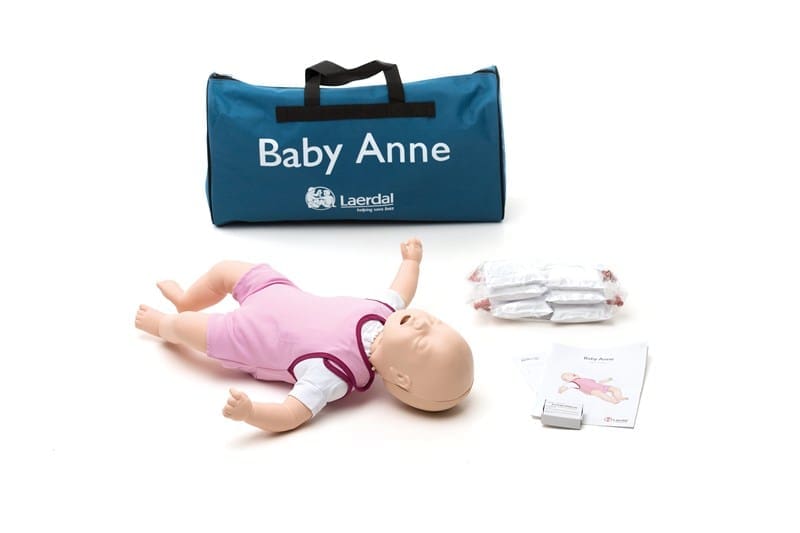
Body-size variety. Workplaces that run repeated classes should have a set that includes adult, child, and infant manikins. The feel of compressions is meaningfully different on a child-sized chest, and pad placement for AEDs shifts with smaller bodies. Where budget is limited, prioritize adults and at least one infant manikin for rotation.
Procurement tip for Canada. Buying CPR training manikins in Canada, rather than importing ad hoc, simplifies warranty and replacement parts. Delays waiting for proprietary lungs or skin sleeves can sideline classes for weeks. A local distributor with stock on the shelf beats a lower sticker price that strands you without consumables.
AED training equipment in Canada that mirrors your installed defibrillators
The best training does not leave learners translating between two sets of prompts. If your facilities have a specific AED brand, match your AED training equipment to that brand’s language cadence, pad shapes, and visual cues. Even within the same manufacturer, models differ in where pads store, whether a lid opens to start, and how voice prompts sound. These details get coded into muscle memory.
Scenarios that force decisions. Good AED trainers allow shockable and non-shockable rhythms, motion artifacts, and low battery simulations. When I run drills, I program at least one scenario where the device advises no shock, because that is surprisingly common and students need to learn to pivot back to compressions without second guessing.
Pads that stick without shredding the manikin. Trainers should use reusable training pads that adhere to manikins repeatedly without leaving residue. In mixed-weather facilities, the adhesive fails faster in cold, dusty rooms. Keep spare pad adhesives or backings on hand, and consider pad savers for high-turnover classes.
Bilingual prompts and volume control. In many Canadian workplaces, delivering training in both English and French is either necessary or simply fair. Trainers that switch languages easily let you set expectations for the real device. Volume control helps in loud industrial spaces, where you otherwise end up repeating the AED out loud for the class.
Safety and separation from live units. Keep live AEDs in cabinets and trainers in a distinct storage bin, clearly labelled. More than one company has accidentally used real pads on a manikin during a drill. That creates waste and embarrassment at best, and risks downtime if a live AED ends up missing pads afterward.
CPR and first aid training kits that protect your real supplies
You do not want to raid regulatory first aid kits to stock a class, then discover the production floor kit is short on triangular bandages during a shift. A training kit should mirror the items people will touch in an emergency, but in trainer form where possible.
Pressure dressings, gauze, triangular bandages, roller wraps, splints, eye pads, and gloves are the basics to demonstrate bleeding control, limb immobilization, and eye injuries. Add epinephrine trainer pens and inhaler spacers if your workforce includes people at risk for severe allergies or asthma, and train on positioning and assisting without administering medication unless your jurisdiction and policy allow it.
Where eyewash stations are mandated, teach with a trainer eyewash bottle so learners practice aim and volume without depleting the plumbed or cartridge systems. For chemical handling sites, consider a generic spill neutralization trainer for dry runs, not the actual neutralizer.
What belongs in robust CPR instructor packages in Canada
If you are building the capacity to run classes internally, consolidate your purchases into CPR instructor packages Canada suppliers curate for corporate programs. The better packages balance realism, portability, and serviceability. The difference shows up six months later when you are not hunting for a missing valve minutes before class.
At minimum, an instructor package should include multiple adult manikins with visible feedback, one child and one infant manikin, matched AED trainers with spare pads, an instructor manual that https://jaredznbs085.raidersfanteamshop.com/cpr-instructor-packages-canada-bulk-discounts-warranty-tips-and-support-options aligns to the certifying body you use, a set of trainer first aid items, pocket masks, gloves, infection control supplies, alcohol wipes, batteries, and a wheeled hard case or rugged duffel. Ask for an inventory card you can check off before and after each session. If you teach off-site across Canada, look for airline-checkable cases under standard weight limits to avoid oversize baggage fees.
Sector-specific choices that pay off
Office and retail. You can run effective training with a compact kit that fits in a rolling case. Noise is less of a challenge, so AED trainers with moderate speakers are fine. Focus on scenario variety, since the range of health conditions is wide.
Construction and trades. Dust, temperature swings, and rough handling are the norm. Choose manikins with sealed torsos and durable skins. Bring tarps or mats for manikins to keep grit out of airways. AED trainers with louder speakers and brighter indicators help outdoors. Gloves in larger sizes save time when hands are cold or wet.
Manufacturing with machinery. Emphasize bleeding control, safe scene assessment around lockout zones, and burns. Splints that can be shaped quickly teach better than rigid boards in cramped spaces. Add a thermal burn dressing trainer for demonstration.
Hospitality and large venues. Practice in the actual space, not just the training room. Staff need to learn where AED cabinets are, how to route crowds, and how to communicate with security. AED trainers with bilingual prompts often make sense for guest-facing teams.
Remote and northern operations. When hospitals are hours away, the equipment mix shifts. You still need training manikins and AED trainers, but invest in rugged cases, spare batteries, and backup sets of lungs and valves since resupply can take time. If you train during winter, keep trainers and manikins in heated storage to prevent plastic brittleness.
Marine and dockside. Moisture and salt accelerate wear. Wipe equipment after each class and dry fully before storage. AED trainers should be clearly segregated from marine AEDs, which often have specific pad packaging. Practice on deck if possible, so people learn stable positioning.
A quick-read checklist for most workplaces
- Adult CPR manikins with compression feedback, plus one child and one infant manikin for rotation
- AED training equipment that matches installed AED models, with spare training pads and bilingual prompts
- CPR and first aid training kits with trainer versions of dressings, splints, epinephrine trainers, and inhaler spacers
- Instructor supplies, including pocket masks, gloves, sanitizers, manikin lungs or valves, and surface mats
- Storage and logistics, such as labelled bins, battery organizers, and a rugged wheeled case
Storing, cleaning, and tracking the fleet
Cleanliness is not just optics. Students take cues from the state of your gear. Set a ritual at the end of each session. Wipe manikin faces and chests with approved disinfectants, replace lungs or valves as per the manufacturer, and air out the kit before closing the case. Rotate consumables so older items get used first in training. Keep training gear separate from operational first aid kits with distinct labels and, ideally, a different colour scheme.
Battery management is the unglamorous chore that keeps classes on schedule. Most AED trainers and feedback manikins either take AA cells or have rechargeable packs. My rule is simple. If a device supports both, use rechargeables for routine classes and keep a shrink-wrapped set of alkalines in the case for emergency backup. Mark the date of battery insertion on a small piece of painter’s tape.
Inventory sheets save hours. Before wheels roll to a job site, someone should sign off on a one-page list of items and counts. After class, the same sheet gets updated and filed. A shared spreadsheet tracks replacements and budget impact. When equipment moves between regions, this documentation becomes essential.
How to choose between buying and renting
For organizations that run a handful of classes each year, renting CPR training manikins and AED trainers from a local provider can make financial sense. You avoid maintenance and storage overhead. The downside arrives when schedules shift. Rental inventories book up in peak months, especially in late spring and early fall. Shipping costs across provinces are not trivial, and damage in transit becomes your headache.
Once you pass about eight to ten full classes per year across sites, ownership usually wins. The payback period tightens if you operate in multiple locations or remote areas where rental logistics are clumsy. Owning also enables micro-drills, fifteen minutes at a shift change, that keep skills fresh without the ceremony of a full course.
Match training to the people in front of you
The best equipment fails if the class does not meet employees where they are. In a mixed-lingual group, bilingual AED prompts and handouts help, but the delivery matters more. Slow the cadence, demonstrate once at full speed, then break steps down. For participants with limited upper body strength, teach role switching every two minutes and emphasize the team nature of CPR. For people with mobility impairments, assign leadership roles such as timekeeping, prompting, and calling emergency services.
Instructor-to-student ratios matter. With too many learners per manikin, people fade into the back. Four learners per adult manikin is a workable ceiling for skills practice. If resource constrained, run stations and rotate small groups, but do not exceed that ceiling for the hands-on portion.
Data, drills, and the moments after a real event
Track who trained on what, when, and with which equipment. Many organizations already keep certificates on file. Add a simple record of the scenarios students completed, for example, shock advised, no shock advised, infant choking. This helps target refreshers. After a real-world event in your workplace, hold a short debrief within 72 hours. Inspect the involved AED for pad replacement and battery status, then update training scenarios to reflect what actually happened. I once added a scenario about clearing wet skin because a team struggled with pad adhesion near a pool deck. That fix came from lived experience, not a manual.
Maintenance cadence that avoids unpleasant surprises
- Replace or disinfect manikin lungs or valves after each class, per maker’s instructions
- Check AED trainer batteries monthly, run a full scenario, and inspect pad adhesive
- Launder or disinfect reusable slings and wraps, then restock trainer dressings
- Review inventory sheets quarterly and pre-order consumables before peak seasons
- Inspect cases, zippers, and wheels twice a year, repairing before field failures
Budgeting with real numbers, not hopes
Sticker prices tell only part of the story. Consider consumables, shipping, taxes, storage, and staff time to set up and tear down. For a mid-sized facility running quarterly classes for 60 to 100 employees, a realistic first-year budget might include three adult manikins with feedback, one child and one infant, two matched AED trainers with spare pads, CPR and first aid training kits, a CPR instructor package Canada distributor support plan, plus cases and hygiene supplies. Numbers vary, but the total commonly lands in the low five figures in Canadian dollars. Subsequent years are cheaper, mostly consumables and occasional parts.
When finance asks for justification, cite reduced disruption from scheduling rentals, improved response times measured on drills, and potential insurance discounts tied to demonstrable training. Do not promise reductions in recordable incidents. Training prepares you for bad days, it does not eliminate them.
Sourcing in Canada without regrets
Working with Canadian suppliers streamlines compliance with Health Canada device licensing and bilingual labelling, and it simplifies returns and support. If you standardize AEDs across sites, standardize AED trainers as well. Buy extra training pads and manikin lungs during the initial purchase, not months later when a backorder appears. Ask vendors for loaner equipment policies while yours is in for repair. If your operations cross provinces, pick suppliers with warehouses in more than one region to cut lead times.
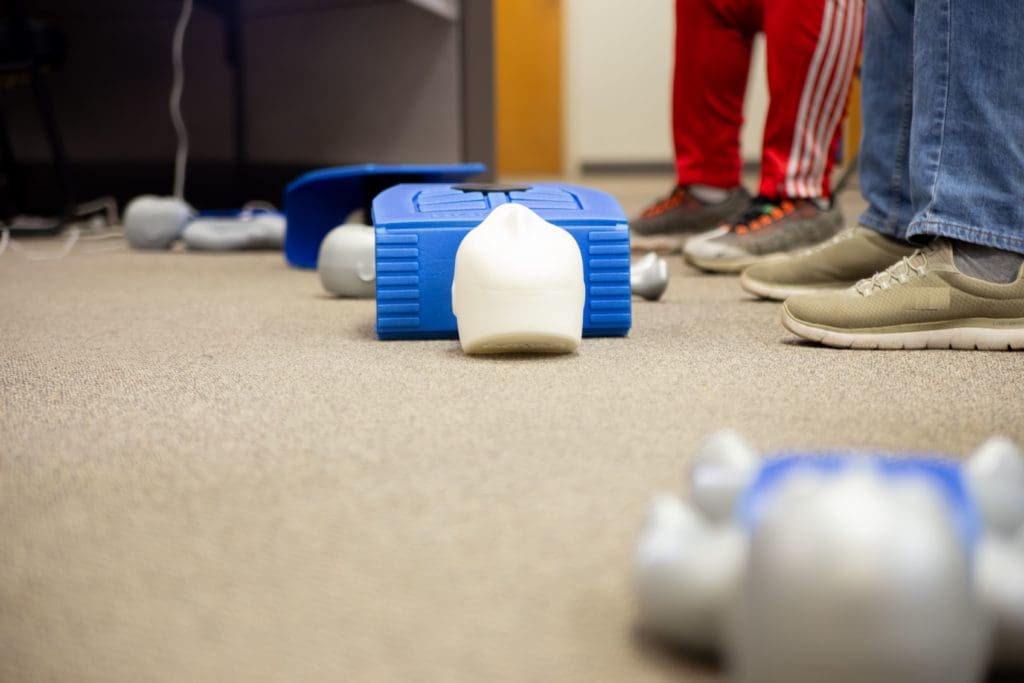
When evaluating CPR training manikins Canada wide, look for clear commit dates on consumables and written cleaning guidance compatible with your facility disinfectants. For AED training equipment Canada distributors, verify that trainer prompts and pad shapes match your installed fleet and that bilingual prompt packs are available. With CPR instructor packages Canada offerings, insist on an itemized list and the ability to swap kit components so you are not stuck with unnecessary items.
Weather, storage, and the Canadian factor
In January, a kit left in a vehicle can freeze solid in Winnipeg or Saguenay. Plastics get brittle, adhesives fail, and rechargeable batteries sulk. Keep equipment in climate-controlled storage whenever possible and transport it in insulated cases in winter. In coastal or humid environments, add silica gel packs to cases and air them out after classes. None of this is glamorous, but it extends the life of your investment.
When training outdoors, bring weighted sheets or sandbags to secure manikins against wind, and bright cones to mark stations. Train with the clothing reality people wear, including gloves, parkas, and rain gear. Practicing pad placement on a jacketed torso is a memory that sticks.
Building a culture where equipment gets used, not admired
Equipment does not create readiness alone. Small, frequent drills do. Ten-minute refreshers at shift handover beat a long annual lecture. Rotate roles so everyone touches the manikin and the AED trainer multiple times across the year. Post drill scores for compression depth and rate when your manikins track them. Friendly competition drives better technique than reminders.
When an incident happens, celebrate the response, not just outcomes. Survival in cardiac arrest is a chain of events that includes recognition, rapid 911 call, early CPR, AED use, and professional care. Your equipment makes three of those steps possible. People need to know their practice mattered.
The list of what to buy is not long, but doing it thoughtfully matters. Focus on CPR training manikins that teach correct feel, AED training equipment that mirrors your reality, CPR and first aid training kits that protect your operational supplies, and CPR instructor packages that make logistics easy. Treat the gear as part of a living program, not a one-time purchase, and your workplace will be ready when seconds count.
CPR Depot Canada — Business Info (NAP)
Name: CPR Depot CanadaAddress: 340 Croft Dr, Tecumseh, ON N8N 2L9
Phone: +1-877-570-7322
Website: https://cpr-depot.ca/
Email: [email protected]
Hours:
Monday: 9:00 AM – 6:00 PM
Tuesday: 9:00 AM – 6:00 PM
Wednesday: 9:00 AM – 6:00 PM
Thursday: 9:00 AM – 6:00 PM
Friday: 9:00 AM – 6:00 PM
Saturday: Closed
Sunday: Closed
Open-location code (Plus Code): 8537+C8 Tecumseh, Ontario
Map/listing URL: https://www.google.com/maps/place/CPR+Depot/@42.3036,-82.8392601,17z/data=!3m1!4b1!4m6!3m5!1s0x883b2aedd5f271a1:0xfee6f8b7ab8f4110!8m2!3d42.3036!4d-82.8366852!16s%2Fg%2F1q6cff15h
Embed iframe:
Socials:
https://www.facebook.com/people/CPR-Depot-Inc/61575911496200/ https://www.instagram.com/cprdepotinc/ https://www.youtube.com/@CPRDepot
https://cpr-depot.ca/
CPR Depot Canada is a supplier of medical training products and related supplies serving customers across Canada.
The business is listed at 340 Croft Dr, Tecumseh, ON N8N 2L9.
To contact CPR Depot Canada, email [email protected] or call +1-877-570-7322.
Hours listed are Monday–Friday 9:00 AM–6:00 PM, with Saturday and Sunday closed.
For directions and listing details, use: https://www.google.com/maps/place/CPR+Depot/@42.3036,-82.8392601,17z/data=!3m1!4b1!4m6!3m5!1s0x883b2aedd5f271a1:0xfee6f8b7ab8f4110!8m2!3d42.3036!4d-82.8366852!16s%2Fg%2F1q6cff15h
Popular Questions About CPR Depot Canada
Where is CPR Depot Canada located?CPR Depot Canada is listed at 340 Croft Dr, Tecumseh, ON N8N 2L9.
What are the hours for CPR Depot Canada?
Hours listed: Monday–Friday 9:00 AM–6:00 PM; Saturday and Sunday closed.
What does CPR Depot Canada sell or provide?
CPR Depot Canada supplies medical and first aid training products and related equipment (product availability varies).
Do they ship across Canada?
The business markets to Canadian customers and operates as a Canada-wide supplier; confirm shipping options at checkout or by contacting [email protected].
How can I contact CPR Depot Canada?
Phone: +1-877-570-7322
Email: [email protected]
Website: https://cpr-depot.ca/
Map: https://www.google.com/maps/place/CPR+Depot/@42.3036,-82.8392601,17z/data=!3m1!4b1!4m6!3m5!1s0x883b2aedd5f271a1:0xfee6f8b7ab8f4110!8m2!3d42.3036!4d-82.8366852!16s%2Fg%2F1q6cff15h
Landmarks Near Tecumseh, ON
1) Tecumseh Town Hall2) Lacasse Park
3) Lakewood Park
4) WFCU Centre (Windsor)
5) Devonshire Mall (Windsor)