Emergency Training Equipment Canada: Budget Planning for 2026
No one enjoys replacing a training fleet, but nothing sours a course faster than a failing clicker in a CPR torso or an AED trainer that refuses to power on. The 2026 budget cycle gives Canadian training providers a chance to deal with aging equipment, take advantage of stable supply in most categories, and set realistic replacement schedules in a market that still feels the aftershocks of https://jaredznbs085.raidersfanteamshop.com/comprehensive-first-aid-oxygen-supplies-in-canada-for-clinics-and-ems the pandemic years. What follows blends practical numbers, procurement tactics, and lessons learned from outfitting classrooms across provinces and territories.
What changed since 2023, and what that means for 2026
Supply chains have largely normalized for mainstream emergency training equipment Canada buyers rely on, though a few specialty items still have long lead times. Plastics and electronics pricing stabilized in 2024 and 2025, which eased the sticker shock that came with inflationary spikes. Freight costs stepped down too, but lithium battery surcharges and hazmat paperwork did not go away. In short, availability is better, but the soft costs around shipping and compliance remain.
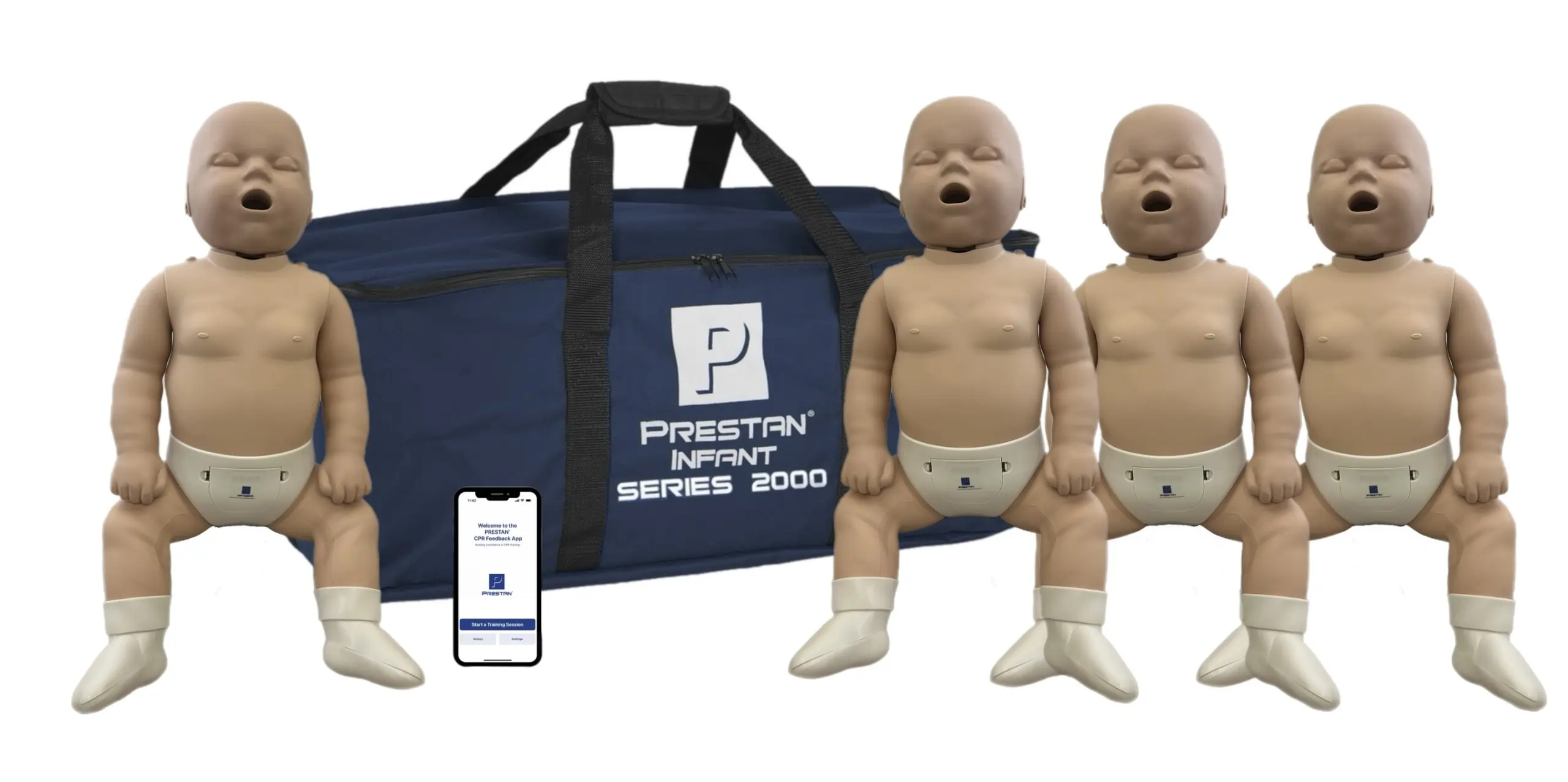
The exchange rate still matters. Many CPR training manikins Canada providers carry are priced in U.S. Dollars at the factory, then imported by Canadian distributors. Budget scenarios for 2026 should model a CAD to USD range of 0.70 to 0.80. On a typical training manikin set priced at USD 900, that swing means CAD 1,125 at parity with 0.80 versus CAD 1,285 at 0.70, before freight and tax. If your organization can prepay deposits or lock quotes for 90 days, that hedges currency risk without spreadsheets worthy of a treasury desk.
Demand has shifted too. Many corporate clients trimmed in-house training during remote-first years, then resumed with compressed schedules. That creates bursts of course throughput, which punishes fleets with weak charging routines or limited spare parts. If your schedule clusters into two or three heavy months per year, stock consumables and spare heads or lung bags accordingly. Batches fail in batches.
Setting priorities for a mixed fleet
Most training departments in Canada run a mix: entry level torsos for lay responder CPR and AED, higher fidelity adult and child simulators for healthcare cohorts, and a shelf of CPR and first aid training kits that rotate through big classes. The impulse is to stretch everything an extra year. Sometimes that works. But certain wear items will cost you more in downtime and instructor effort than they save in capital deferral.
I learned this in the most embarrassing way possible. We had 36 students in a mining site recertification in northern Ontario. Two of the AED trainers had crackly speakers. They worked fine in the office, failed in the cold, and the echo in the shop floor swallowed half the prompts. We lost ten minutes per evolution to repeats. The miners were pros about it, but the schedule slid and travel time ballooned. The problem was not the AED brand. It was our failure to replace speakers and batteries on a predictable cycle.
For 2026, plan to refresh the high impact items first: manikin faces and lungs, CPR feedback modules with worn sensors, AED trainer batteries and pads, and first aid trainer consumables used in mass courses. Replace or refurbish higher value manikins and airway heads on a staggered plan that fits your accreditation rhythm.
The core categories, with realistic budget ranges
Prices here reflect typical Canadian distributor pricing as of mid 2025, converted into CAD, excluding tax and shipping. Use them to sanity check quotes, not as hard bids. Specific models, volume tiers, and training center affiliations will shift your actual costs.
Adult CPR manikins with feedback. The most common class set in Canada pairs four adult torsos with compression depth and rate indicators. Expect CAD 1,200 to 2,400 for a basic four pack without electronics. If you need Bluetooth style app feedback, plan for CAD 2,800 to 4,500 for a four pack with integrated sensors. Brands like Prestan and Brayden anchor this segment. Laerdal sits higher in price, often with sturdier shells and well supported spare parts. For mixed fleets, match feedback tech so instructors are not juggling two apps mid class.
Child and infant manikins. A two child, two infant set usually lands between CAD 900 and 2,200 depending on feedback and brand. Infant feedback sensors take more abuse than you would expect, especially in corporate classes where participants dig fingers in a little too hard. Budget 10 to 20 percent of the purchase price annually for replacement faces, lungs, and valves.
AED training equipment Canada buyers have a wide field. No trainer is perfect because real AED user interfaces vary by manufacturer. Balance realism against durability and pad costs. Entry level single unit AED trainers run CAD 180 to 350, reliable mid range units CAD 350 to 650, and premium multi scenario units CAD 700 to 1,200. Pad sets for trainers cost CAD 20 to 70 per pair. Stock at least two pad sets per trainer to keep rotations smooth. Rechargeable battery packs last 2 to 4 years with proper charging discipline. Spare them like you spare projector lamps.
CPR instructor packages Canada distributors assemble bundles that include adult and infant manikins, AED trainers, a pump for lungs, barrier devices, and a carry case. They are convenient for new instructors or satellite sites. Expect CAD 1,800 to 4,500 for a complete starter bundle that can serve eight students at one station. Bundles save 10 to 20 percent versus piecemeal, but check the consumables inside. Some bundles hide small quantities of lungs or face shields that do not match your real throughput.
CPR and first aid training kits. This category feels mundane until you run out of triangle bandages on day one of a multi day course. A robust kit for classroom practice with splints, roller gauze, triangular bandages, cravats, practice epinephrine trainers, and tourniquets typically costs CAD 250 to 700 per station, depending on the number of students and realism. Plan to refresh soft goods annually and to quarantine practice tourniquets for training only. Do not be tempted to substitute operational devices in the classroom, then return them to a live kit.
Airway management heads and BVM trainers. For healthcare cohorts, an adult airway head with tongue, epiglottis, and teeth that bite back sits between CAD 700 and 1,800. Pediatric versions come slightly higher. If you add suction practice or advanced airway modules, the price climbs. These are durable but need careful cleaning discipline and storage away from UV and dust.
Trauma manikins and specialty simulators. Prices spread widely. A basic extrication and carry manikin might be CAD 600 to 1,200. A hemorrhage control simulator with replaceable skin and pump driven blood can run CAD 2,000 to 8,000. If your organization teaches Stop the Bleed or Tactical Emergency Casualty Care, plan not only for the simulator, but also for the ongoing cost of simulated blood, hoses, and skin inserts. That consumable line is where budgets often go sideways.
AV and room equipment. Projectors, speakers, and camera setups for blended delivery or assessment do not carry the glamour of new manikins, yet they prevent repeat sessions. A portable speaker that can cut through a shop floor or gym costs CAD 150 to 400 and should be a line item, not a borrowed afterthought. Pair it with spare cables and a power bar in every instructor kit.
Shipping, compliance, and the Canadian context
Canadian realities change procurement math. Lithium batteries for AED trainers ship under Transport of Dangerous Goods rules, even for small quantities. Many couriers add a battery surcharge per package, not per shipment. Consolidate orders to reduce per unit shipping cost, but watch seasonal backlogs in November and early December. West coast weather and prairie cold snaps are not budget lines in your system, yet they affect your timelines.
On bilingual packaging and materials, Quebec clients and national accounts expect French and English labeling and manuals. Most major brands serving Canada have bilingual inserts. Verify this at quote time. Instructors working in Quebec should also plan for French language student materials and AED trainer voice prompts. Not every model includes a French prompt set out of the box.
Health Canada classification matters less for trainers than for operational devices. AED trainers are not medical devices in the same sense as live AEDs, so registration is not the barrier it is for a real defibrillator. But if you are purchasing live AEDs along with training units, confirm that your distributor can supply Health Canada licensed devices with bilingual labeling, and that you understand provincial public access defibrillation program requirements where they exist.
Standards, accreditation, and what they imply for equipment
National training partners such as the Canadian Red Cross and the Heart and Stroke Foundation specify equipment capabilities, especially around compression feedback and AED prompting. Review the 2020 ILCOR and 2020 to 2025 guideline updates reflected in those curricula. Most will carry through 2026. If your manikins cannot demonstrate rate and depth feedback to the standard your accreditor expects, you will spend extra instructor time coaching by feel. That works in small classes, not in twenty person corporate sessions.
For first aid modules, standard workplace courses expect splinting, bandaging, scene management, and AED use at a minimum. If you deliver advanced courses, verify that your airway heads accommodate the skills in scope. There is nothing more awkward than teaching Supraglottic airway placement on an older head that does not accept the device your clinical partner uses.
Build a maintenance culture, not just a purchasing plan
Manikins fail in predictable ways. Lungs leak, torsos crack around the neck, feedback sensors get lazy when their contact points corrode. AED trainers fail in less predictable ways. Speakers blow, firmware glitches, batteries develop memory when someone quick charges right before class every time. A maintenance calendar makes these events routine rather than disruptive.
Disinfection protocols are part of maintenance, not just infection control. Public Health Agency of Canada guidance and most manufacturer instructions allow 70 percent isopropyl alcohol wipes for manikin faces and chests. Many household disinfectants contain quats that degrade plastics or remove screen printing from AED trainers. Bleach is effective but hard on seals and skin. Test new wipes on a hidden surface, then document your approved products and contact times. The instructor who erases half the chest landmarks with the wrong wipe does not need a lecture. They need a better SOP and a labeled bin.
Expect to replace lung bags after each class day or each cohort, depending on your accreditor’s policy. Many providers treat them like gloves: use once, dispose. That keeps hygiene and performance predictable, and it gives you an easy counting system for inventory.
The two numbers that usually get missed
Spare instructor time and shipping. When budgets squeeze, it is tempting to run with barely enough equipment and ask the instructor to bridge gaps. That turns them into a logistics tech during class. Every swap, pad tape job, or mid course charge cycle steals focus from teaching. For 2026, price your classes to fund an extra 5 to 10 percent of equipment above your minimum. If you need four torsos for a small class, own five. That spare buys you quality when something fails.
Shipping remains lumpy. A CAD 50 battery can cost CAD 28 to move if it rides alone with a battery surcharge. Combine orders quarterly or semi annually where possible, and keep a small safety stock to avoid overnight panic buys.
A short checklist for building your 2026 budget
- Inventory by serial or kit number, and log hours or course counts for each manikin and AED trainer.
- Assign replacement years by category, not by sentiment, then lock them into your capital plan.
- Model consumables per student per course type, validate with last year’s actuals, then add 10 percent for loss and damage.
- Capture the true cost of shipping, battery surcharges, and instructor travel tied to equipment, and bake them into your rate card.
- Confirm accreditation requirements for feedback and scenarios, and crosswalk them against your current fleet’s capabilities.
Lifecycle planning that saves money without cutting corners
A three tier approach works for most organizations.
Entry tier. Durable torsos with clickers or simple lights, sturdy infant models, and mid range AED trainers. This tier serves community and workplace classes where realism helps, but throughput and reliability matter more. Keep these in rolling cases so they survive stairwells, gravel lots, and winter parking lots.
Mid tier. App connected feedback manikins, infant feedback sensors, and AED trainers that mirror the devices used by your largest clients. Use this tier for clients who expect metrics or where instructors need to demonstrate finer points of recoil or hand position. This is where battery discipline and firmware updates pay off.
Advanced tier. Airway heads, hemorrhage control simulators, and specialty devices. Assign these to instructors with the appetite to maintain them. Put their spare parts in the same case as the unit, along with a laminated quick start card that lives in the lid. Do not assume the instructor who gets the gear is the one who will deploy it in a pinch.
For replacement cycles, the following rule of thumb fits a typical training load of 800 to 1,500 student certifications per year spread across two to four instructors. Light or heavy use will shift these numbers by a year in either direction.
- Adult and infant manikin shells: 5 to 7 years if stored properly and not left in hot vehicles.
- Feedback electronics modules: 3 to 5 years, with one battery replacement around year 2 or 3.
- AED trainer units: 4 to 6 years, with pad replacements annually or biannually depending on adhesive quality and student load.
- Airway heads: 5 to 8 years with diligent cleaning and storage; replace teeth and soft tissue as needed.
- Trauma simulators: 4 to 7 years, but plan for annual consumables equal to 10 to 25 percent of the unit’s purchase price.
Where to spend extra, where to save
Spend extra on anything the student touches for more than a minute. Good chest recoil feedback and realistic infant chest compliance improve skill retention and reduce instructor fatigue. Save on the carrying cases if your equipment lives in one or two classrooms, and redirect that money to spare faces and lungs. Spend on extra AED trainer pads for adhesive heavy courses, save on fancy replacement remotes if the trainer can be programmed at the unit. Spend on a quiet classroom speaker that runs all day on battery, save on expensive hard cases if you can outfit a soft bag with foam inserts.
Do not overspend for feature parity across the fleet if your instructors only use a fraction of the functions. For instance, some AED trainers offer multi language prompts and advanced scenarios that your classes never run. Better to buy the simpler model in larger quantity and keep classes flowing with identical interfaces.
Procurement tactics that work in Canada
Three quotes still win. But timing matters more. Large brands and Canadian distributors often run fiscal year end promotions in March and April, then again in late fall. If your fiscal year differs, ask for a 60 to 90 day hold on pricing. Many will accommodate if you can provide a purchase order number or a letter of intent.
Cooperative purchasing programs can help municipalities and larger nonprofits. If your organization partners with a local college, approach their procurement office to see if your training center can buy under their vendor agreements. The paperwork takes time, but the price stability over a multi year horizon is worth it.
Warranty terms vary. Entry level brands often carry 1 year on shells and 2 to 3 years on electronics. Higher end brands invert that. Read the exclusions on consumables. Lungs and faces are never under warranty. Keep registration serials in a simple spreadsheet linked to your inventory list. When something fails, a registered serial often shortens the replacement process by a week.
For northern and remote communities, freight is the hidden tax. Plan annual consolidated orders with generous lead time. Put a small repair kit in each satellite site: valves, lungs, extra AED trainer pads, and a head strap or two. Add a laminated card with the distributor’s parts desk email and your internal asset number. If an instructor onsite can swap a valve in ten minutes, you avoid a trip that eats a day and a half.
Cleaning, storage, and the cost of neglect
If your budget includes one new shelf this year, make it the drying shelf. After class, hang lungs and masks to dry fully before storage. Trapped moisture cuts the life of valves and breeds odour that no wipe solves. Label bins for each station so faces and lungs live with their manikin. Cross contamination between stations is a false economy when the instructor cannot find parts from kit A that someone tucked into kit C.
Heat ruins more manikins than clumsy students. A van in July can exceed 50 degrees Celsius. That warps chests and loosens adhesive on AED pads. Store gear indoors between deployments. If that is not possible, rotate which kits ride in vehicles and which rest in the office so heat exposure spreads across the fleet.
Funding sources worth checking
Small increases in course pricing are one lever, but not the only one. Provincial workplace safety rebates sometimes fund training equipment if tied to a documented safety program. Corporate clients often sponsor AED trainer purchases if the trainer matches their live AED brand, because it improves transfer of learning. Some municipalities budget separately for public education and may contribute to instructor packages if your team delivers community CPR events. Grants for rural health initiatives can include training gear, especially for first responder programs that bridge to EMS.
If you train healthcare workers, ask clinical partners about education budgets that can fund airway heads or trauma simulators. Framed as workforce development, those purchases sometimes route through different cost centers with more flexibility.
Data that makes next year easier
A simple practice will improve your 2027 planning: collect three pieces of data per class. Number of students, equipment used by station, and any failure or mid class swap. A Google Form or a one page paper checklist works fine. Over a few months, patterns emerge. You will notice that one batch of infant lungs fails early, or that one AED trainer gobbles batteries faster. Use that to argue for replacement ahead of the worst day, not after it.
Inventory discipline pays dividends too. Tag each kit with a QR code linking to a short page listing what is inside. When a loan returns, scan, tick the list, and note shortages. The ten minutes you spend there saves an hour the morning of a big class.
Pulling it together for a 2026 budget that holds
Start with what you need to protect course quality: reliable CPR feedback, consistent AED prompts, and enough spares to glide through inevitable hiccups. Layer in realistic shipping and battery costs, then make room for hygiene consumables. The rest is sequencing and discipline. Replace the pieces that burn instructor time and student goodwill first. Use bundles when they genuinely save money, not because the catalog picture looks tidy. Align equipment capability with the requirements of your accreditor and your largest clients.
When the quote totals make your finance lead blink, walk them through your replacement cycles, your inventory data, and the real costs of instructor time lost to failing gear. People understand a schedule and a plan. They resist a wish list. Emergency training equipment Canada providers who build that plan now, and tune it with simple data and sound maintenance, walk into 2026 with classes that start on time, run smoothly, and send students out the door with skills that stick. That is the return on investment that matters.
CPR Depot Canada — Business Info (NAP)
Name: CPR Depot CanadaAddress: 340 Croft Dr, Tecumseh, ON N8N 2L9
Phone: +1-877-570-7322
Website: https://cpr-depot.ca/
Email: [email protected]
Hours:
Monday: 9:00 AM – 6:00 PM
Tuesday: 9:00 AM – 6:00 PM
Wednesday: 9:00 AM – 6:00 PM
Thursday: 9:00 AM – 6:00 PM
Friday: 9:00 AM – 6:00 PM
Saturday: Closed
Sunday: Closed
Open-location code (Plus Code): 8537+C8 Tecumseh, Ontario
Map/listing URL: https://www.google.com/maps/place/CPR+Depot/@42.3036,-82.8392601,17z/data=!3m1!4b1!4m6!3m5!1s0x883b2aedd5f271a1:0xfee6f8b7ab8f4110!8m2!3d42.3036!4d-82.8366852!16s%2Fg%2F1q6cff15h
Embed iframe:
Socials:
https://www.facebook.com/people/CPR-Depot-Inc/61575911496200/ https://www.instagram.com/cprdepotinc/ https://www.youtube.com/@CPRDepot
https://cpr-depot.ca/
CPR Depot Canada is a supplier of medical training products and related supplies serving customers across Canada.
The business is listed at 340 Croft Dr, Tecumseh, ON N8N 2L9.
To contact CPR Depot Canada, email [email protected] or call +1-877-570-7322.
Hours listed are Monday–Friday 9:00 AM–6:00 PM, with Saturday and Sunday closed.
For directions and listing details, use: https://www.google.com/maps/place/CPR+Depot/@42.3036,-82.8392601,17z/data=!3m1!4b1!4m6!3m5!1s0x883b2aedd5f271a1:0xfee6f8b7ab8f4110!8m2!3d42.3036!4d-82.8366852!16s%2Fg%2F1q6cff15h
Popular Questions About CPR Depot Canada
Where is CPR Depot Canada located?CPR Depot Canada is listed at 340 Croft Dr, Tecumseh, ON N8N 2L9.
What are the hours for CPR Depot Canada?
Hours listed: Monday–Friday 9:00 AM–6:00 PM; Saturday and Sunday closed.
What does CPR Depot Canada sell or provide?
CPR Depot Canada supplies medical and first aid training products and related equipment (product availability varies).
Do they ship across Canada?
The business markets to Canadian customers and operates as a Canada-wide supplier; confirm shipping options at checkout or by contacting [email protected].
How can I contact CPR Depot Canada?
Phone: +1-877-570-7322
Email: [email protected]
Website: https://cpr-depot.ca/
Map: https://www.google.com/maps/place/CPR+Depot/@42.3036,-82.8392601,17z/data=!3m1!4b1!4m6!3m5!1s0x883b2aedd5f271a1:0xfee6f8b7ab8f4110!8m2!3d42.3036!4d-82.8366852!16s%2Fg%2F1q6cff15h
Landmarks Near Tecumseh, ON
1) Tecumseh Town Hall2) Lacasse Park
3) Lakewood Park
4) WFCU Centre (Windsor)
5) Devonshire Mall (Windsor)