Compliance Made Easy: Choosing Emergency Training Equipment in Canada That Meets Standards
Canadian instructors and program managers carry a double load. You have to teach lifesaving skills with clarity and realism, and you have to prove that your equipment and methods meet Canadian requirements. The first part is about pedagogy and hands-on practice. The second part is about the patchwork of national standards, provincial regulations, and the expectations of recognized training agencies. When your CPR class runs smoothly, no one notices the planning behind the scenes. When something goes wrong, everyone asks for the paper trail.
I have equipped classrooms from Halifax to Nanaimo and audited programs in remote sites where the nearest replacement airway is a plane ride away. Good choices on day one mean fewer disruptions later, fewer warranty calls, and less time justifying your kit to an auditor. This guide will help you select CPR training manikins Canada instructors trust, AED training equipment Canada distributors can support, and complete CPR and first aid training kits that satisfy provincial regulators without busting your budget.
The Canadian compliance picture, in plain language
You do not need to memorize statute numbers to buy the right equipment, but you do need to understand who sets the rules that affect you.
Nationally, resuscitation guidance in Canada is aligned with the International Liaison Committee on Resuscitation and published by the American Heart Association. The Heart and Stroke Foundation of Canada adopts these guidelines, as does the Canadian Red Cross and other recognized providers. If your gear can support teaching the current guidelines for compression depth, rate, recoil, airway management, and AED use, you are off to a good start.
Workplace first aid is regulated provincially. Ontario’s WSIB First Aid Regulation 1101 sets training and kit content rules for many employers. Quebec follows CNESST requirements. WorkSafeBC, WorkSafeNB, WCB Alberta, and others have their own frameworks. These bodies approve training providers and specify outcomes rather than brands. In short, your equipment must enable the skills each province requires, and your chosen provider’s curriculum must be authorized in that province.
Two Canadian Standards Association references come up regularly in audits and RFPs. CSA Z1210 covers workplace first aid training program requirements, and CSA Z1220 covers first aid kits for the workplace. Neither standard mandates a specific manikin or AED trainer, but both imply that training aids must be fit for purpose, durable, and allow instructors to verify student competence. If your equipment provides objective feedback for CPR quality and realistic AED practice without electrical hazard, you meet the spirit of these standards.
Finally, Health Canada regulates medical devices. Many training aids are not classified as medical devices because they do not diagnose or treat a condition, but some CPR feedback systems cross that line by claiming physiological measurement. When a product is marketed as a medical device in Canada, it must have a device license and a licensed importer. When in doubt, ask the distributor for the product’s device class and license status, and keep that confirmation on file.
What makes a manikin compliant and effective
A compliant manikin supports current guideline targets and allows the instructor to verify performance. An effective manikin does this reliably, across dozens of classes, at a cost per learner that keeps your program viable.
The fundamentals have not changed since the 2015 updates. Adult compressions need a depth of about 5 to 6 cm at a rate of 100 to 120 per minute, with full chest recoil and minimal interruptions. Ventilations should deliver enough volume to see chest rise, generally around 500 to 600 mL for an adult, with care not to overventilate. Infant and child targets differ but follow the same logic, and classes must practice on appropriately sized models.
In practice, good CPR training manikins Canada programs adopt share a few traits. They have durable torsos with standardized chest springs so you can feel when you hit 5 cm, not just guess from a green light. The airway should open with realistic head tilt and chin lift. Palpable landmarks on the sternum and ribs help learners find correct hand placement, which reduces scatter in real compressions. I prefer lung bags that seat easily because wrestling plastic during a class wastes time and erodes confidence. For programs that teach bag mask ventilation, choose manikins that seal well with standard adult and pediatric masks. Nothing discourages a new rescuer like watching air hiss past the cheeks no matter how carefully they position the mask.
Feedback matters for assessment. Entry level models provide a clicker or a simple light to show compression depth. Mid range units add a compression rate indicator. The most sophisticated systems pair via Bluetooth to an app that scores depth, rate, recoil, hand position, and ventilation volume. There is a judgment call here. For large classes where you must certify many students, app based feedback speeds evaluation and generates documentation you can archive. For smaller programs or those operating on tight budgets, a mechanical indicator and a trained instructor’s eye are enough to meet standards without the headache of device management.
Sanitation is not optional. Public Health Agency of Canada guidance and common sense align on this point. Use disposable or dedicated face pieces and one way valves. Clean contact surfaces with an appropriate disinfectant after each session. During respiratory illness spikes, many programs also switch to compressions only practice on shared equipment and use individual pocket masks for ventilation practice. If your manikins rely on shared lungs or face skins, budget for frequent replacement. I replace lungs after every class that included rescue breaths and swap face skins after every two to three classes, sooner if heavily used by makeup wearers that stain silicone.
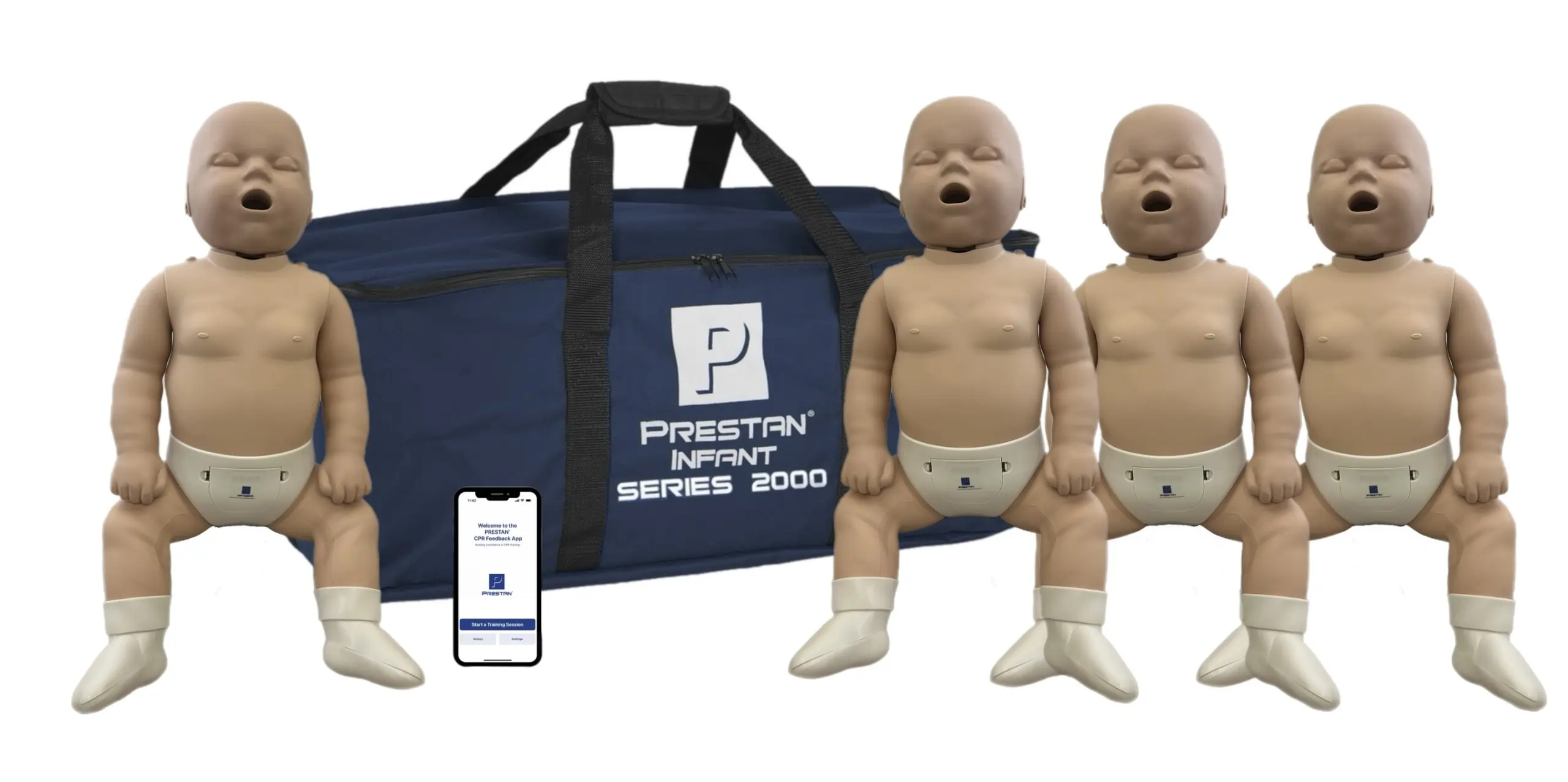
From a procurement standpoint, choose a platform that fits your course mix. If you run blended courses with heavy recert volume, portability rules. A four pack of lightweight torsos with a rolling bag makes more sense than one heavy, feature rich unit. If you train first responders who require high fidelity airway practice and real time metrics, invest in a couple of advanced units to anchor your assessments, and keep simpler torsos for the bulk of hands on repetition.
AED trainers that teach without risk
AED training equipment Canada suppliers offer a range from simple, low cost trainers with fixed scenarios to advanced units that mimic specific public access defibrillators. Regardless of price, a training AED used in Canada must be non shocking, clearly marked as a trainer, and compliant with transport rules if it contains lithium batteries. You do not need a device license for a typical non shocking trainer, but verify the import status if you buy from outside Canada, and keep the SDS for lithium cells if you ship units between sites.
Training value comes from realism and flexibility. Real pads that adhere to manikins, including hairy torsos, help learners succeed on test day. Pediatric pad options and a child switch reinforce correct energy selection and pad placement for smaller patients. Scenario controls let the instructor introduce shockable and non shockable rhythms, poor pad contact, and reasons to stop and resume compressions. If you teach in workplaces that have a specific AED brand on the wall, brand matched trainers reduce confusion under stress. If you serve multiple clients, cross brand trainers that simulate several popular models lower your inventory cost.
A practical note from the road. In cold Canadian winters, gel pads lose stickiness and peel. Keep spare sets warm in an inside pocket until you need them. For remote northern classes, ship extra pads ahead of time, double the usual allotment, because resupply is not an option once you land.
The Canadian lens on CPR and first aid training kits
Workplace kits must meet the content requirements of the province where the work takes place. That is the non negotiable starting point. CSA Z1220 offers a useful baseline, and many employers adopt it even if their province uses a different list. Kits for training are a different issue. Your course equipment must include the items required by your training provider’s standard, and it must be sufficient in number and quality to allow all learners to perform required skills.
A typical set for a 12 person class includes adult and infant manikins in at least a 2 to 1 student to manikin ratio, AED trainers and pads, barrier devices, gloves in multiple sizes, splints, triangular bandages, roller gauze, a rigid board for moving practice if covered by the course, and epinephrine auto injector trainers if anaphylaxis is in scope. Some providers require a specific list and quantities. Keep a laminated inventory sheet in each kit and check it during setup and teardown. I have seen more classes delayed by missing scissors and dead AED trainer batteries than by any regulatory surprise.
Bilingual labelling matters in many workplaces, and it is good practice in national programs. If your contracts include Quebec, use CPR instructor packages Canada distributors that can supply https://holdenidth425.capitaljays.com/posts/equipping-volunteer-teams-affordable-cpr-and-first-aid-training-kits-in-canada French and English manuals, cards, and wall posters. Even outside Quebec, federal sites and national employers often request bilingual materials to support inclusivity and compliance.
Instructor packages that pass audits without drama
When a program fails an audit, the root cause is often a mismatch between the approved provider’s policy and what happens in the room. CPR instructor packages Canada instructors rely on should include current instructor manuals, lesson plans, evaluation forms, and digital assets like videos and slide decks that match the provider’s version. Equipment lists in those packages are not suggestions. If it says you need one AED trainer per group of four, plan for that ratio. Keep print or digital proof that your version is current. For example, if your provider updated its adult compression recoil language after the 2020 guideline update, you should be able to show that your slides and handouts reflect the change.
I keep a compliance binder with the following, and it has saved me more than once during a site visit. Approval letters from the training agency, proof of my current instructor status, a copy of the course outline, a list of equipment with serial numbers, a maintenance log for manikins, a cleaning protocol, and a sample of completed student evaluation forms with names redacted. It sounds fussy until a corporate health and safety manager asks to see your maintenance documentation for the CPR feedback device and you can produce it in 30 seconds.
Matching equipment to provincial expectations
No two provinces draw the line in the same place. Ontario’s WSIB cares that a provider is approved and that the course matches Regulation 1101 outcomes. Quebec’s CNESST requires courses recognized in that province and materials in French. BC workplaces with higher risk profiles may require more advanced first aid levels, which changes your kit needs. Oil and gas sites in Alberta often specify additional topics like oxygen administration and use of automated external defibrillators, which means more equipment and more maintenance. If you teach national accounts, build modular kits that scale up or down depending on the jurisdiction. It beats lugging an oxygen cylinder to a Saskatchewan office building that only needs Emergency First Aid.
In remote or Indigenous communities, shipping delays and climate complicate logistics. Build redundancy into the plan. Send duplicate airway supplies. Choose rechargeable batteries for instructors who cannot easily buy alkaline cells locally, but keep a stash of AAs as a fallback because winter travel and lithium charging do not always mix. When you travel by small aircraft, remember that lithium batteries fall under Transportation of Dangerous Goods rules. Pack them in carry on when flying commercially and declare them when required.
Avoiding common pitfalls that cost money and credibility
I have seen programs tripped up by details that seemed minor at purchase time. The cheapest manikin is not a bargain if replacement lungs take six weeks to arrive from overseas and you teach weekly. AED trainers with proprietary pads lock you into a single vendor. If you deliver bilingual courses, some otherwise excellent manikins have app interfaces that cannot switch languages, which complicates student feedback. Cloud connected feedback platforms may store student data outside Canada, and privacy teams push back hard if you cannot guarantee data residency or articulate how you handle personal information under PIPEDA. It is better to raise these issues with vendors during selection than to unwind a procurement later.
Storage space is another frequent blind spot. A municipal training room with a tidy equipment closet does not prepare you for a client site where your classroom is a boardroom with no storage and a long walk from the loading dock. In that scenario, four compact torsos and a soft sided bag for first aid gear turn a painful setup into a manageable one.
Cleaning, infection control, and durability
Most training agencies publish cleaning protocols. Follow them and adapt to your local public health guidance during outbreaks. Use alcohol based disinfectants compatible with your manikin’s materials. Some silicone face skins craze or cloud when exposed to strong solvents. Test on a hidden corner before you wipe down a dozen units. Wear gloves during cleaning. Dispose of lung bags and one way valves appropriately. Document your cleaning schedule, especially if you share equipment among instructors.
Durability is predictable if you keep records. The first thing that fails on budget torsos is the chest spring. On mid range units with electronics, it is often the battery door or the Bluetooth module. On high end feedback devices, calibration drift appears after a year of heavy use. In every case, ask the vendor two questions before you buy. What is the expected service life at 1,000 students per year, and how fast can I get spare parts from a Canadian warehouse. If the answer to the second question involves a three week cross border shipment, consider another option unless you can afford to stock spares.
Accessibility and inclusivity in practice
Real compliance includes equitable access. Choose manikins in multiple skin tones to reflect the communities you serve. For learners with low vision, prefer feedback that includes audible cues, not only lights on a chest they may not see clearly. For learners with limited mobility or upper body strength, adjustable chest resistance helps them practice technique without fatigue based frustration. If you use e learning modules as part of blended courses, ensure videos have closed captions and transcripts, and that your LMS works with screen readers. These are not just nice to have features. Many public sector contracts in Canada reference accessibility acts such as AODA in Ontario, and you will be asked to demonstrate how your program meets them.
Budgeting for total cost, not sticker price
The cheapest path over a three year period often involves mid tier equipment with Canadian parts support, not entry level kits that look inexpensive at first glance. Build a budget that covers initial purchase, consumables per class, shipping, expected repairs, and an annual refresh of items that wear out faster than you think. For planning purposes, I use a rule of thumb of 2 to 4 dollars per student for consumables in a course that includes rescue breaths. If your AED trainers use brand specific pads that cost 30 to 40 dollars per pair and last for 10 to 15 classes, pencil that in. Shipping to the territories or northern Quebec can dwarf consumable costs, so consolidate orders and keep a buffer stock.
Grants and rebates can help. Some provinces and municipalities offer support for public access defibrillation programs and associated training. These funds rarely specify brands but do require proof that your equipment is fit for purpose and that you have a maintenance plan. Keep your documentation tight, and you can tap funding that competitors miss.
Documentation that satisfies auditors
A brief list of the specific records that make audits painless:
- Proof of alignment with current resuscitation guidelines, usually a statement from your training agency and the version dates of your manuals and slides.
- Equipment inventory with model numbers, serials, purchase dates, and warranty terms, plus a maintenance log for manikins and AED trainers.
- Cleaning and infection control procedures and a log of when you last cleaned and replaced consumables.
- Copies of provincial approvals or provider recognition where required, and bilingual material lists when teaching in Quebec or federal workplaces.
Keep digital copies in a shared folder and a printed set in a binder that travels with your kits. If you lose a class day to a forgotten cable, it stings. If you fail an audit because you cannot produce a maintenance record, you risk a contract.
A straightforward path to procurement, from shortlist to shelf
If you need a simple, stepwise approach to move from options to an order without second guessing, follow this:
- Clarify your delivery footprint by province and your training provider’s exact equipment requirements, including ratios and feedback expectations.
- Set performance criteria for manikins and AED trainers that match those requirements, then add practical constraints like weight, storage, and battery type.
- Verify Canadian support by asking vendors about Health Canada licensing where applicable, parts stocked in Canada, bilingual materials, and shipping timelines to your sites.
- Run a pilot with two or three options in actual classes for one week, capture instructor and learner feedback, and inspect units for early wear.
- Award based on total cost of ownership over three years, not unit price, and write your maintenance and consumables plan into the purchase order so funding exists when you need it.
Where each keyword naturally fits in your planning
When you talk to vendors or write an internal memo, you will hear and use the same phrases that clients and auditors expect. Emergency training equipment Canada wide should read as a coherent package, not a mix of mismatched parts. If you are equipping a new site, start by selecting CPR training manikins Canada distributors can service in your region, then pair them with AED training equipment Canada instructors recognize from common public access models. Round out the setup with CPR and first aid training kits that match CSA guidance and provincial regulations. For teams expanding rapidly, CPR instructor packages Canada agencies provide can standardize delivery across sites as long as you keep versions synced.
A final word on judgment
Standards, approvals, and checklists keep you on the rails, but judgment keeps the train moving. I once taught a class in a coastal fish plant where the floors were slick and the power flickered with the tide pumps. We trained with portable lights and extra nonslip mats under the manikins, and we adjusted pad placement drills to account for wet skin and cold hands. None of that nuance appears in a policy, yet it matters when the goal is competence that transfers to real emergencies. Choose equipment that gives you room to adapt without leaving compliance behind. When you can back your decisions with documentation and practical reasons, auditors nod and move on, and your students leave with skills that stick.
If you bring that mindset to selecting and maintaining your gear, compliance becomes a byproduct of good practice, not a burden. Your courses run on time, your reports pass muster, and the one day someone collapses in a hallway or on a shop floor, your graduates will know what to do and will have felt it in their hands before. That is the measure that counts.
CPR Depot Canada — Business Info (NAP)
Name: CPR Depot CanadaAddress: 340 Croft Dr, Tecumseh, ON N8N 2L9
Phone: +1-877-570-7322
Website: https://cpr-depot.ca/
Email: [email protected]
Hours:
Monday: 9:00 AM – 6:00 PM
Tuesday: 9:00 AM – 6:00 PM
Wednesday: 9:00 AM – 6:00 PM
Thursday: 9:00 AM – 6:00 PM
Friday: 9:00 AM – 6:00 PM
Saturday: Closed
Sunday: Closed
Open-location code (Plus Code): 8537+C8 Tecumseh, Ontario
Map/listing URL: https://www.google.com/maps/place/CPR+Depot/@42.3036,-82.8392601,17z/data=!3m1!4b1!4m6!3m5!1s0x883b2aedd5f271a1:0xfee6f8b7ab8f4110!8m2!3d42.3036!4d-82.8366852!16s%2Fg%2F1q6cff15h
Embed iframe:
Socials:
https://www.facebook.com/people/CPR-Depot-Inc/61575911496200/ https://www.instagram.com/cprdepotinc/ https://www.youtube.com/@CPRDepot
https://cpr-depot.ca/
CPR Depot Canada is a supplier of medical training products and related supplies serving customers across Canada.
The business is listed at 340 Croft Dr, Tecumseh, ON N8N 2L9.
To contact CPR Depot Canada, email [email protected] or call +1-877-570-7322.
Hours listed are Monday–Friday 9:00 AM–6:00 PM, with Saturday and Sunday closed.
For directions and listing details, use: https://www.google.com/maps/place/CPR+Depot/@42.3036,-82.8392601,17z/data=!3m1!4b1!4m6!3m5!1s0x883b2aedd5f271a1:0xfee6f8b7ab8f4110!8m2!3d42.3036!4d-82.8366852!16s%2Fg%2F1q6cff15h
Popular Questions About CPR Depot Canada
Where is CPR Depot Canada located?CPR Depot Canada is listed at 340 Croft Dr, Tecumseh, ON N8N 2L9.
What are the hours for CPR Depot Canada?
Hours listed: Monday–Friday 9:00 AM–6:00 PM; Saturday and Sunday closed.
What does CPR Depot Canada sell or provide?
CPR Depot Canada supplies medical and first aid training products and related equipment (product availability varies).
Do they ship across Canada?
The business markets to Canadian customers and operates as a Canada-wide supplier; confirm shipping options at checkout or by contacting [email protected].
How can I contact CPR Depot Canada?
Phone: +1-877-570-7322
Email: [email protected]
Website: https://cpr-depot.ca/
Map: https://www.google.com/maps/place/CPR+Depot/@42.3036,-82.8392601,17z/data=!3m1!4b1!4m6!3m5!1s0x883b2aedd5f271a1:0xfee6f8b7ab8f4110!8m2!3d42.3036!4d-82.8366852!16s%2Fg%2F1q6cff15h
Landmarks Near Tecumseh, ON
1) Tecumseh Town Hall2) Lacasse Park
3) Lakewood Park
4) WFCU Centre (Windsor)
5) Devonshire Mall (Windsor)